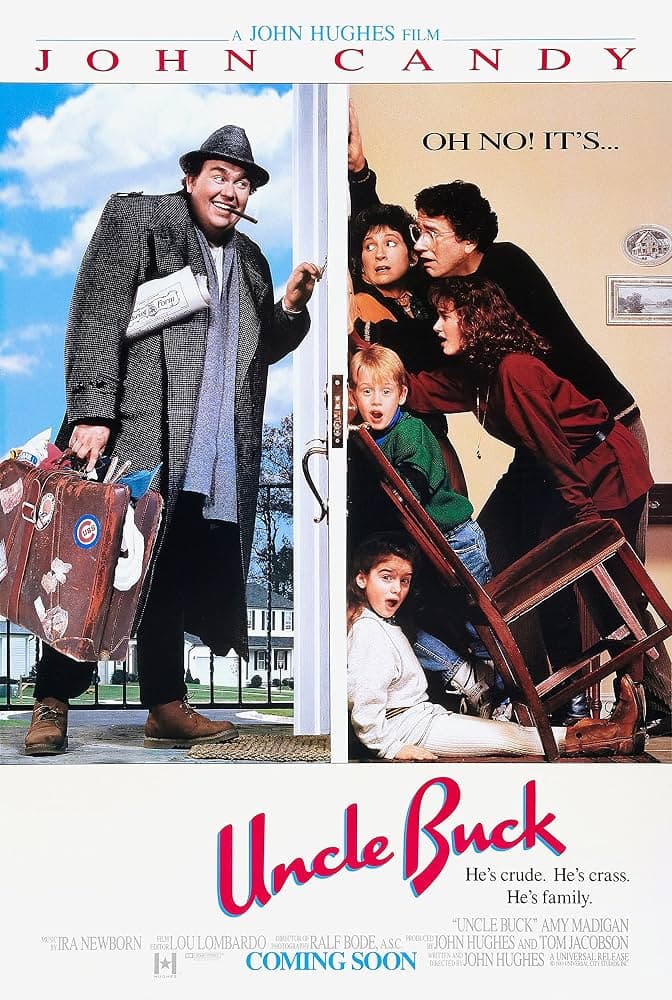
The setup
Uncle Buck is the sort of movie that sounds like a simple babysitting comedy until you remember it’s John Hughes steering a big-hearted wrecking ball through family life. Put John Candy in the driver’s seat as Buck Russell and you get chaos, groans and a surprising amount of tenderness in under 100 minutes.
THE MOVIE
Buck Russell is still the reason this movie works
Uncle Buck opens with a problem any family could recognise: the parents are summoned away by a sudden family emergency and leave three kids in need of a sitter. That basic, believable panic is the small engine the whole film runs on.
Into that gap comes Buck Russell — a slovenly, good-natured bachelor who arrives promising he’ll look after the kids. He’s set up as someone who’d rather avoid steady work, yet here he is, forced into domestic territory he’s never wanted and clearly isn’t ready for.
That tension — family responsibility versus bachelor freedom — is what keeps the movie moving. John Hughes wrote and directed it with an eye for both comic mess and genuine warmth, and John Candy plays the role that makes the idea actually land.
THE SETUP
The idea that sets Uncle Buck in motion
The film’s premise is economical: the Russell parents must leave town after a sudden family medical emergency, so someone needs to mind their children. It’s believable, small-scale and instantly relatable — exactly the sort of compact premise that turns comedy into character work.
From there the story leans into generational strain. Buck’s main obstacle is earning the trust of his 15-year-old niece, Tia, who’s angry about the parents’ absences and the family’s recent move. Her resentment is personal, adolescent and pointed, which raises the stakes beyond mere slapstick.
Hughes layers Buck’s domestic incompetence — the wrestling with everyday chores and his unorthodox childcare methods — with other beats: a bet on horse racing and confrontations with Tia’s boyfriend and local figures. Those elements keep the comedy varied and the plot mobile.
Structurally it’s a tidy family-comedy arc: things begin in disorder under Buck’s care, escalate when Tia goes missing to a party, and resolve through Buck’s search and the shifting relationships that follow as he slowly assumes responsibility.
THE CHARACTER
Why Buck Russell matters
Buck isn’t a hero you’d put on a pedestal. He’s a lovable, irresponsible bachelor who’d rather skate through life than settle into a nine-to-five. And that’s precisely why he matters: he’s the opposite of what the family needs, so his attempts at care produce comedy and, eventually, change.
The kids respond differently to him, which is crucial to the emotional arc. The younger pair warm to his frank, fun approach, while Tia — older, angrier and embarrassed by the family’s upheaval — locks down. That contrast lets the film move from easy laughs to something quieter and more earned.
Buck’s girlfriend functions as a mirror: her presence highlights the friction between his bachelor instincts and the new responsibilities he’s forced to face. And when Tia’s boyfriend becomes a catalyst for confrontation, Buck’s choices stop being amusing mishaps and start feeling consequential.
Put simply: Buck matters because he’s the messy test the Russell family didn’t know they needed. He forces fault lines to show, and in doing so becomes the unlikely agent of a family’s modest repair.
THE PERFORMANCE
Why John Candy's performance matters
Contemporary reviewers singled out John Candy as the film’s emotional and comic anchor. That’s a useful shorthand: the material asks for a presence who can be loud and foolish without collapsing into caricature, and the film rests on that balance.
Because the screenplay puts Buck in situations that require both broad physical business and genuine tenderness, the central turn needs to hold the tone together. The film’s ability to shift from silly to sincere owes a lot to how the lead is written and presented.
UNDER THE SURFACE
Uncle Buck has more on its mind than the plot suggests
On the surface it’s a babysitting comedy. Underneath, the film cares about what happens when parental absence collides with adolescence. Tia’s resentments and the family’s dislocation give the jokes sharper edges.
There’s a clear coming-of-age seam running through the picture: the older child’s anger, the younger kids’ openness and Buck’s begrudging movement toward responsibility all play into a theme of awkward, uneven growth.
The film also toys with unconventional parenting. Buck’s methods are chaotic and often wrong-headed, but they press the family into moments where honest communication and simple attentiveness can actually matter.
Generational conflict anchors it all — not as a lecture but as an engine. The friction between Buck’s freedom and the household’s needs creates both the laughs and the small, believable shifts the story depends on.
THE FILMMAKING
How Uncle Buck was put together
The look of the film was handled by Ralf D. Bode, and it was prepared for theatrical presentation with the usual widescreen and stereo options of the time. That technical setup gives the comedy room to breathe without fuss; it’s designed to serve the performances, not show off.
Production designer John W. Corso had to work quickly to build the Russell house and other sets, and the production also adapted school facilities for the shoot, creating an on-site environment that could accommodate the child actors and the practical demands of the schedule.
Editing credits include Lou Lombardo, Tony Lombardo and Peck Prior — a team assembly that helped keep the film’s pace brisk and the comic beats landing across its 100-minute runtime.
Taken together, the film’s crew choices are pragmatic: efficient design, straightforward cinematography and tight editing aimed at delivering Hughes’s blend of broad comedy and domestic detail.
PURE 80S
Uncle Buck could not belong to any other decade
Uncle Buck landed in summer 1989, at the tail end of a decade when John Hughes had been steadily making comedies that examined family and youth life. This film fits into that late-80s cluster naturally — a family picture with a clear emotional throughline and comedic setup.
It also reunites Hughes with John Candy after their earlier pairing, which gives the film a tonal shorthand: audiences already had an idea of what a Hughes–Candy collaboration might feel like.
Finally, the production’s reliance on suburban Chicago locations and the practical step of converting a local high school into production stages places the film firmly in Hughes’s familiar geography. That sense of place is a repeated ingredient in his 80s work.
THE LEGACY
Why Uncle Buck still matters
The film has extended its life beyond the cinema through television adaptations: a CBS sitcom appeared in 1990 and a contemporary ABC version aired in 2016. Those efforts show the story’s premise has continued to feel adaptable.
Uncle Buck also played a practical role in launching Macaulay Culkin’s profile; Hughes saw something in Culkin’s work on this film and later recommended him for the lead in Home Alone, a connection that had real consequences for both projects.
For collectors and viewers there have been home-video restorations and special releases over the years, including a 4K UHD/Blu-ray edition that packages retrospective interviews and commentary for fans who want context.
Taken together, these afterlives — TV versions, casting ripple effects and restored editions — explain why Uncle Buck keeps turning up in conversations about late-80s family film.
THE VERDICT
Does Uncle Buck still hold up?
Short answer: yes — for particular reasons. The film’s set-up is simple and effective: a family emergency forces the parents away and leaves Buck in charge. That clarity lets the comedy and the quieter moments breathe without getting bogged down.
What keeps the film watchable is the central dynamic: Buck’s messiness against Tia’s guarded teen anger. Those oppositions make the story’s stakes emotional rather than merely comic, so when Buck’s clumsy attempts at responsibility start to matter, you care.
The movie is economical too — a compact 100-minute ride, directed and written by John Hughes, built around a character who was deliberately written as a lovable, irresponsible bachelor. That single-mindedness stops the film from sprawling and helps the tone stay consistent.
If you’re after a polished classic, this isn’t a lecture in filmmaking. But if you want a warm, occasionally messy family comedy that still finds honest small moments amid the chaos, Uncle Buck is worth revisiting.
Share this movie
Keep watching
More movies from the 80s
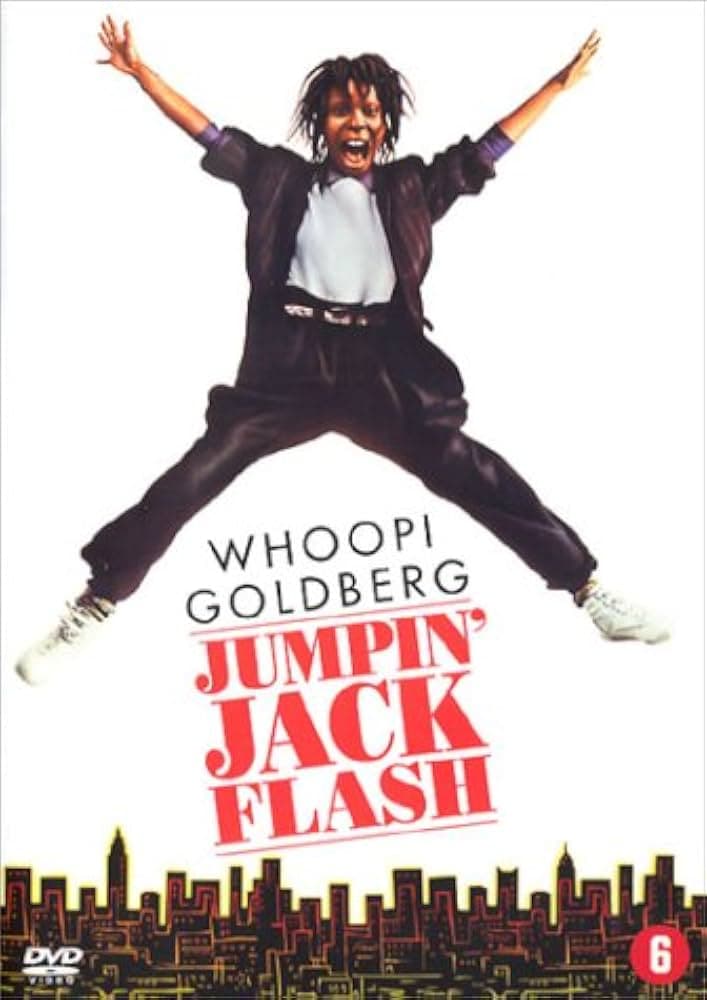
1986
Jumpin' Jack Flash
Jumpin' Jack Flash: our relationship with technology and freedom, and why this 1986 movie still matters.
Read our take →
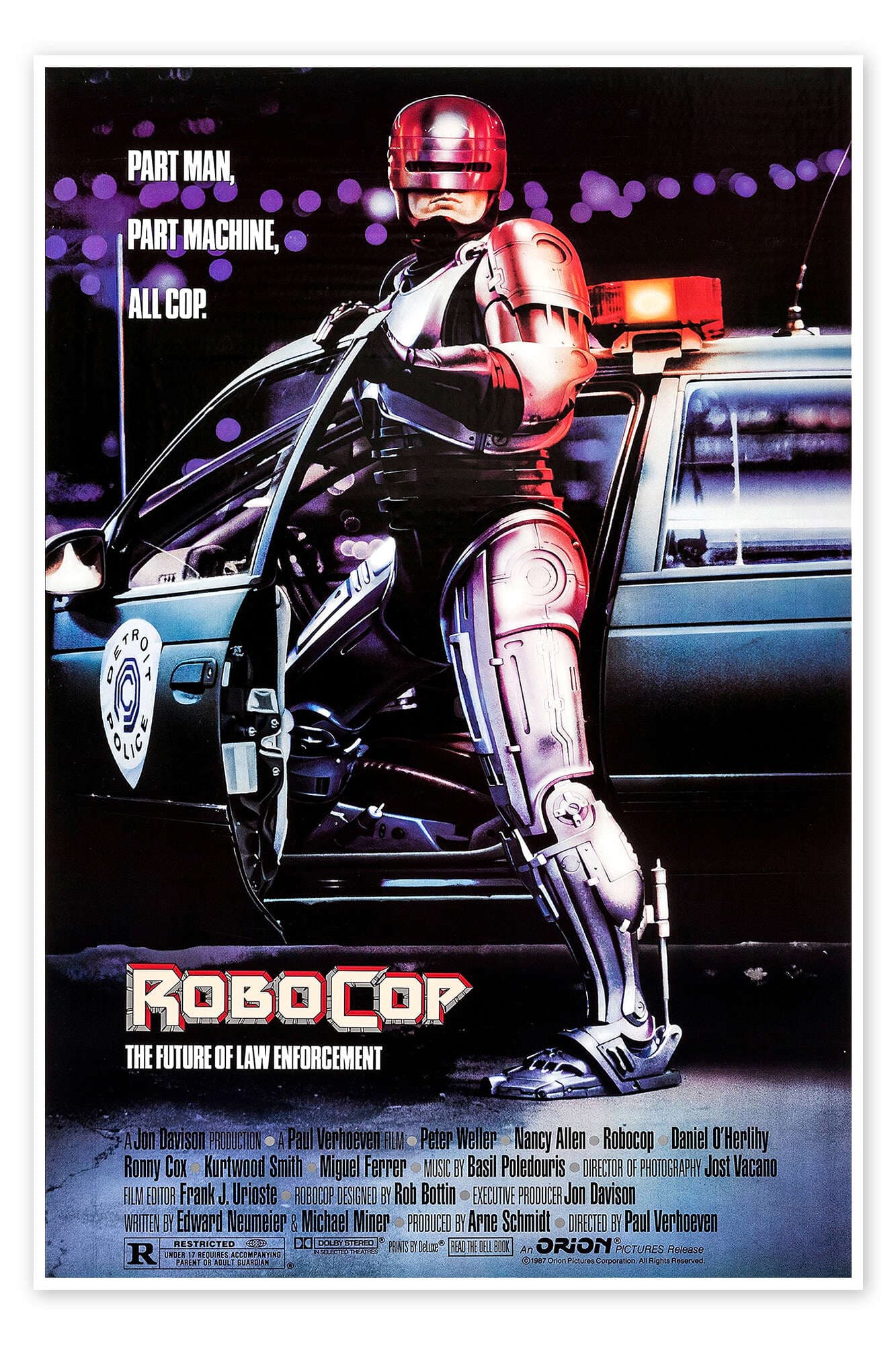
1987
RoboCop
A murdered cop rebuilt as a product — RoboCop still asks who gets to sell justice.
Read our take →
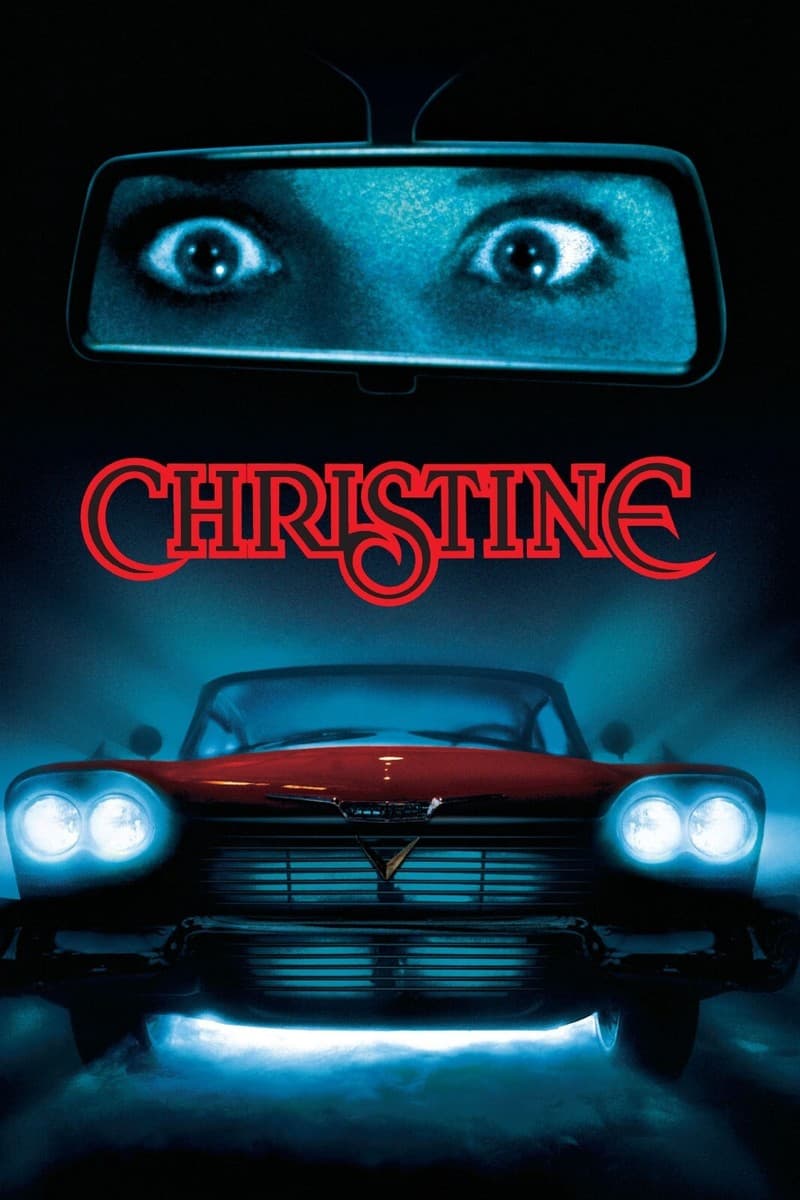
1983
Christine
Obsession, adolescence and a car that won't let go.
Read our take →