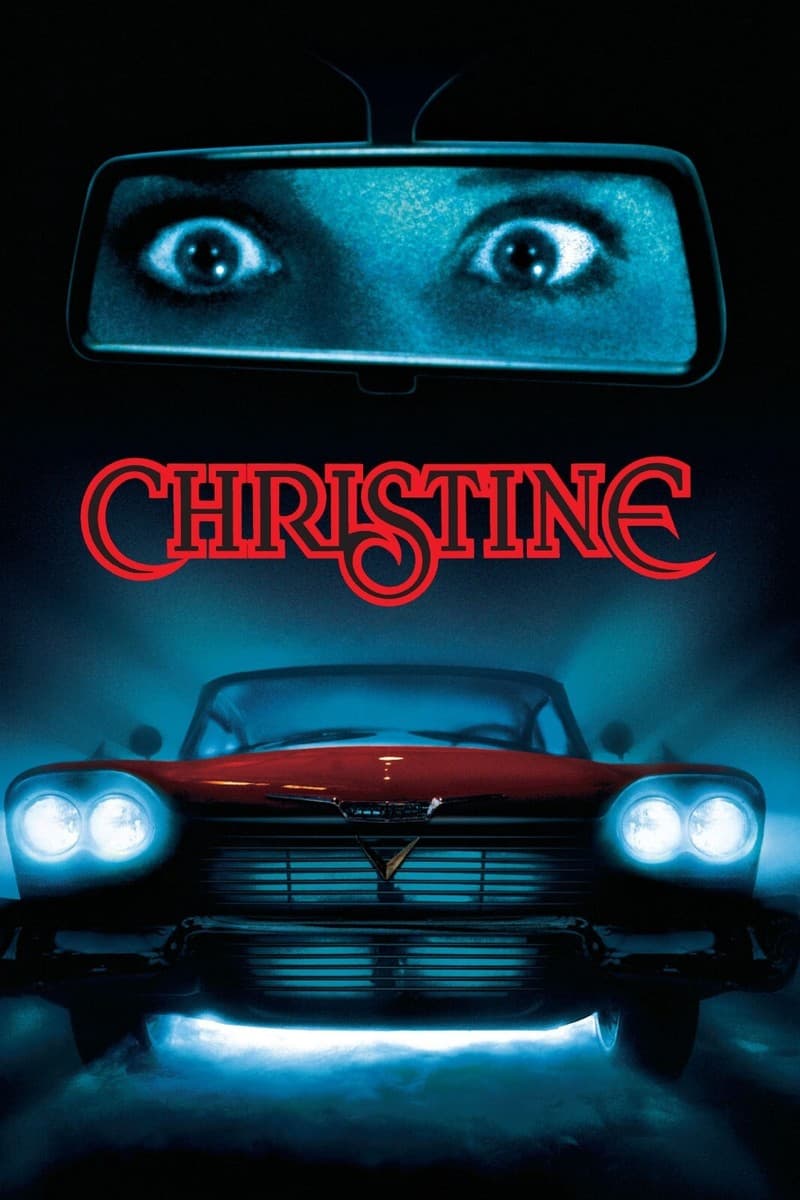
The setup
John Carpenter's Christine is not just a haunted-car picture. It's a film about a teenager who finds a sense of himself under a hood — and then loses it. Revisit it for the peculiar chemistry of Arnie Cunningham, the movie’s oddball gothic heart, and a premise that still makes sense on a late-night watch.
THE MOVIE
Arnie Cunningham is still the reason this movie works
Christine begins in a factory: a 1957 assembly-line prologue that feels like the film setting its teeth around the idea of American chrome and manufacture. Then we meet Arnie Cunningham, a 17-year-old who pulls a broken-down 1958 Plymouth Fury out of a junkyard and straight into his life.
That purchase is the film's ignition. Restoring Christine is presented as Arnie's attempt to build identity and respect — his mechanical skill, his wish to belong — and once the car becomes central, his personality changes quickly and noticeably.
Put plainly: the movie hangs on Arnie. Carpenter stages the supernatural around what happens to this awkward kid when obsession replaces ordinary friendship and romance, and that is what gives the horror a nasty, intimate edge.
THE SETUP
The idea that sets Christine in motion
The film's engine is simple and efficient: Arnie buys and restores a dilapidated 1958 Plymouth Fury nicknamed Christine, and the restoration process is the moment everything changes.
The trouble — and the film's central conflict — is that Christine does not passively sit as a prized possession. The car exerts a possessive, supernatural influence over Arnie and begins directing violent outcomes against anyone who threatens that relationship.
Car-related oddities are treated as clues rather than cheap thrills: vandalism undone by unexplained repair, and an odometer that moves backward are used to show the car's agency rather than relying on exposition.
There are also hints that Christine has a history — previous owners suffered — and the human relationships closest to Arnie fray as the car takes precedence. The setup works because the horror grows out of a believable teen need for belonging that goes wrong.
THE CHARACTER
Why Arnie Cunningham matters
Arnie isn't just the kid who buys the car; he's the human map of the movie's themes. Introduced as socially awkward and good with engines, his attachment to Christine springs from a very ordinary teenage desire: to be noticed and accepted.
That makes his transformation readable. The car promises status and competence — things Arnie lacks — and his single-minded devotion tells us everything we need to know about how possession can masquerade as self-improvement.
The film also gives Arnie a counterpoint in Dennis, his best friend, who watches the change with growing alarm and resistance. And Leigh, his girlfriend, marks how the car corrodes what should be close, human connections.
So Arnie matters because the story uses him to show how obsession replaces the messy, difficult work of becoming an adult with the tidy, lethal certainty of possession.
UNDER THE SURFACE
Christine has more on its mind than the plot suggests
Beneath the chrome and the jump scares, Christine is interested in obsession: how a teenager’s fixation on an object reshapes who he becomes. It reads like a dark, mechanical coming-of-age story.
Possession in the film is literal and metaphorical. The car seems to harbour a hostile will, but the movie also suggests possession as the takeover of a personality by single-minded desire.
Jealousy and revenge are the tools Christine uses: threats to the relationship between Arnie and his world provoke violence. That gives the horror an oddly domestic, almost petty logic — which makes it feel crueler.
And there’s a nostalgia at work too: the film courts a 1950s car culture through its central object, using the Fury as a fetishised link to another, mythologised America that the characters want to possess as much as the car possesses them.
THE FILMMAKING
How Christine was put together
Carpenter's Christine is less about flashy camera gymnastics and more about careful construction. The credits name Donald M. Morgan as cinematographer and Marion Rothman as editor, which frames the movie as a deliberately assembled piece rather than a loose, improvisatory fright show.
A large part of that assembly is production design. Daniel Lomino recreated a 1950s automobile plant on a set built in a former furniture factory, a choice that lets the movie stage this lost industry as a kind of haunted shrine rather than a real location.
That recreated plant and the deliberate editing and photography give the film a crafted, slightly unreal feel — the right texture for a story where an object refuses to stay dead.
In short: the choices behind the camera keep the film focused on objects and environment so the supernatural elements sit within a tangible, controlled world.
PRACTICAL EFFECTS
The effects work that gives Christine its physical personality
Christine's menace is made mostly in the real world. The production acquired a fleet of Plymouth-based cars — AFI records note as many as fourteen on set at once, with press reports of up to twenty-five — so the movie could show the Fury in various states without fakery.
A full gasoline station set was built in Newhall so a timed explosion could be executed in a single, controlled take. That's the sort of production decision that keeps chaos cinematic rather than accidental.
Driving and destruction sequences rely on practical stunt work, which helps the film sell the physical impact of Christine's violence.
The net result is a picture whose threatening object behaves like something you could almost touch — which is exactly what the story needs.
PURE 80S
Christine could not belong to any other decade
Christine came out in 1983, right when Stephen King adaptations were filling cinemas. The novel and the film arrived contemporaneously, which put this particular King tale squarely into the era's appetite for teen-focused supernatural stories.
Producers leaned into that youth angle — the film's focus on teenagers and America's fascination with automobiles was explicitly part of the package when the rights were acquired — so the picture taps into what the early 80s market wanted.
And it's a John Carpenter project from his early-80s phase, so it sits comfortably alongside his other genre work of the period: a filmmaker making efficient, audience-minded horror with a distinct tone.
Taken together, those facts root Christine in its moment: a convergence of King fandom, teen genre interest and Carpenter's reliable directional voice.
WATCHING IT NOW
What has aged — and what hasn't
Collector releases — a limited Twilight Time Blu‑ray and a later 4K reissue — show there’s still appetite among enthusiasts for Carpenter’s take on the material, which suggests parts of the film continue to connect.
The teen-centred Stephen King angle still reads clearly: a story about adolescents reshaped by supernatural forces remains a tidy fit for modern viewers who enjoy character-led horror.
Some pleasures are practical: the film's use of many real Plymouths still gives Christine a tactile reality that holds up on-screen in a way a purely digital approach might not.
So while tastes shift, the movie's core vehicle — a plausible teen crisis married to tangible production values — keeps it watchable for curious viewers today.
THE LEGACY
Why Christine still matters
Christine premiered in North America in December 1983 and made a brief festival presence in early 1984, which helped position it as part of that year's genre conversation.
More tangibly, the film's afterlife is visible in the home‑video market: limited Blu‑ray runs and a 4K reissue show collector demand for Carpenter’s handling of the material and for the film’s particular design.
That kind of steady collector interest is not the same as mainstream ubiquity, but it does mean Christine has a persistent shelf-life among fans who care about genre craftsmanship and the specific pleasures of object-based horror.
So it remains a film people return to — not because it reinvented the wheel, but because it assembled a satisfying one.
THE VERDICT
Does Christine still hold up?
Yes — with a qualification. Christine works today when you watch it as a character piece about a teenager whose attempt to find himself is hijacked by an objectified ideal. The moment Arnie buys and restores the Fury is not just plot; it's the emotional switch that makes the rest of the film believable.
The supernatural mechanics — a car that repairs itself and an odometer that regresses — still play as clever, economical signs that the Fury has agency. They keep the premise tight and avoid over-explaining the uncanny.
The film's heart is the relationship triangle: Arnie, his best friend Dennis who resists the change, and Leigh who sees what Christine is doing to him. That human friction gives the horror gravity rather than making it a parade of set pieces.
If you like Carpenter’s early-80s mood, tidy practical production, and stories where adolescent identity is the battleground, Christine is worth a watch. Critics at the time — Roger Ebert among them — noticed how the car developed a distinct presence on-screen, and that presence is what still gives the film bite.
Share this movie
Keep watching
More movies from the 80s
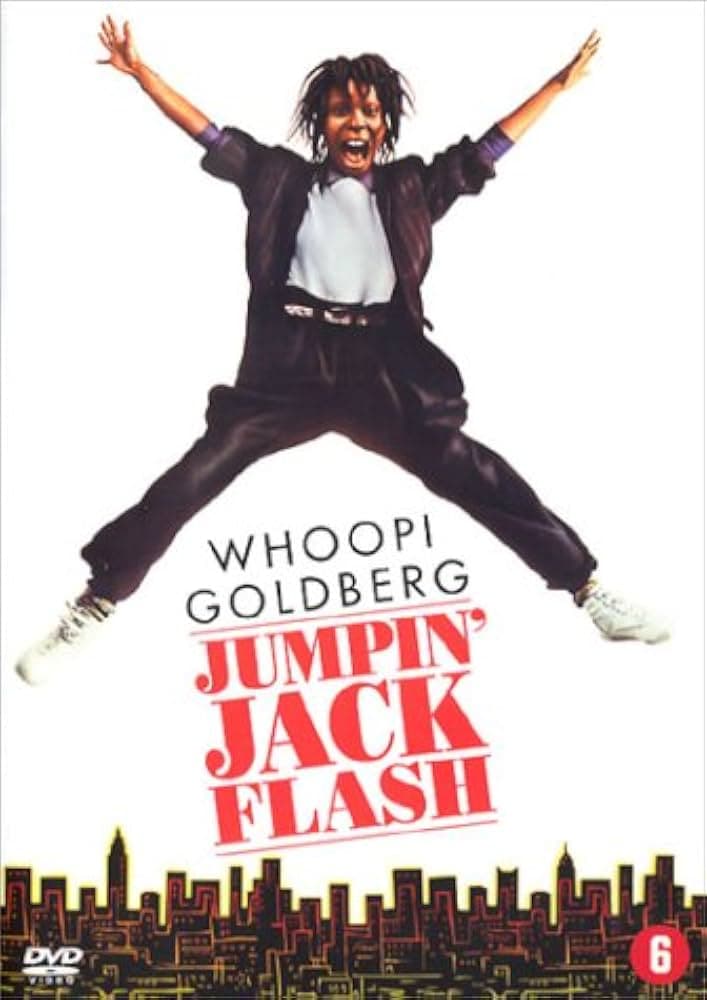
1986
Jumpin' Jack Flash
Jumpin' Jack Flash: our relationship with technology and freedom, and why this 1986 movie still matters.
Read our take →
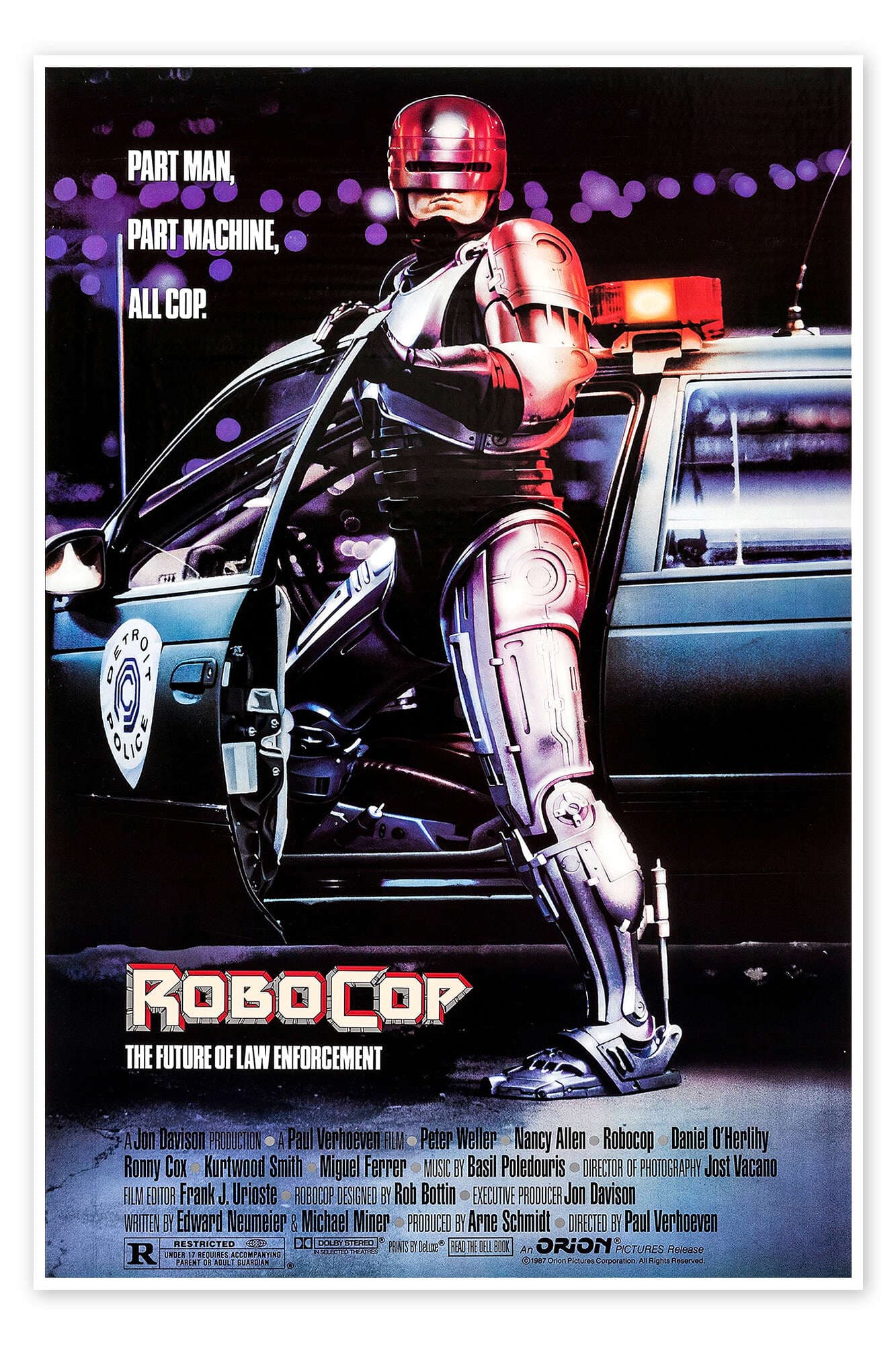
1987
RoboCop
A murdered cop rebuilt as a product — RoboCop still asks who gets to sell justice.
Read our take →
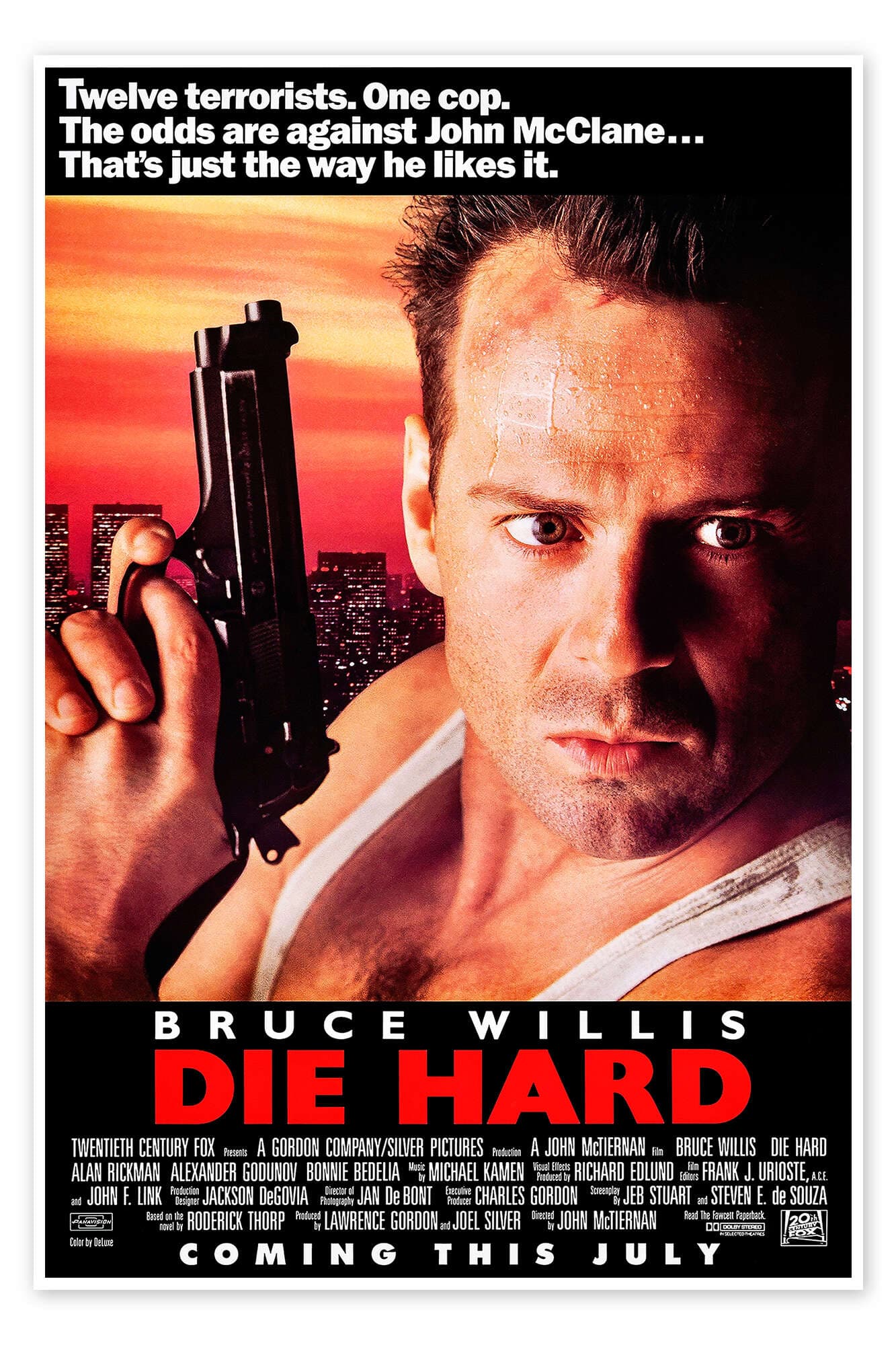
1988
Die Hard
One cop, a Christmas party gone wrong and a marriage he can't ignore.
Read our take →