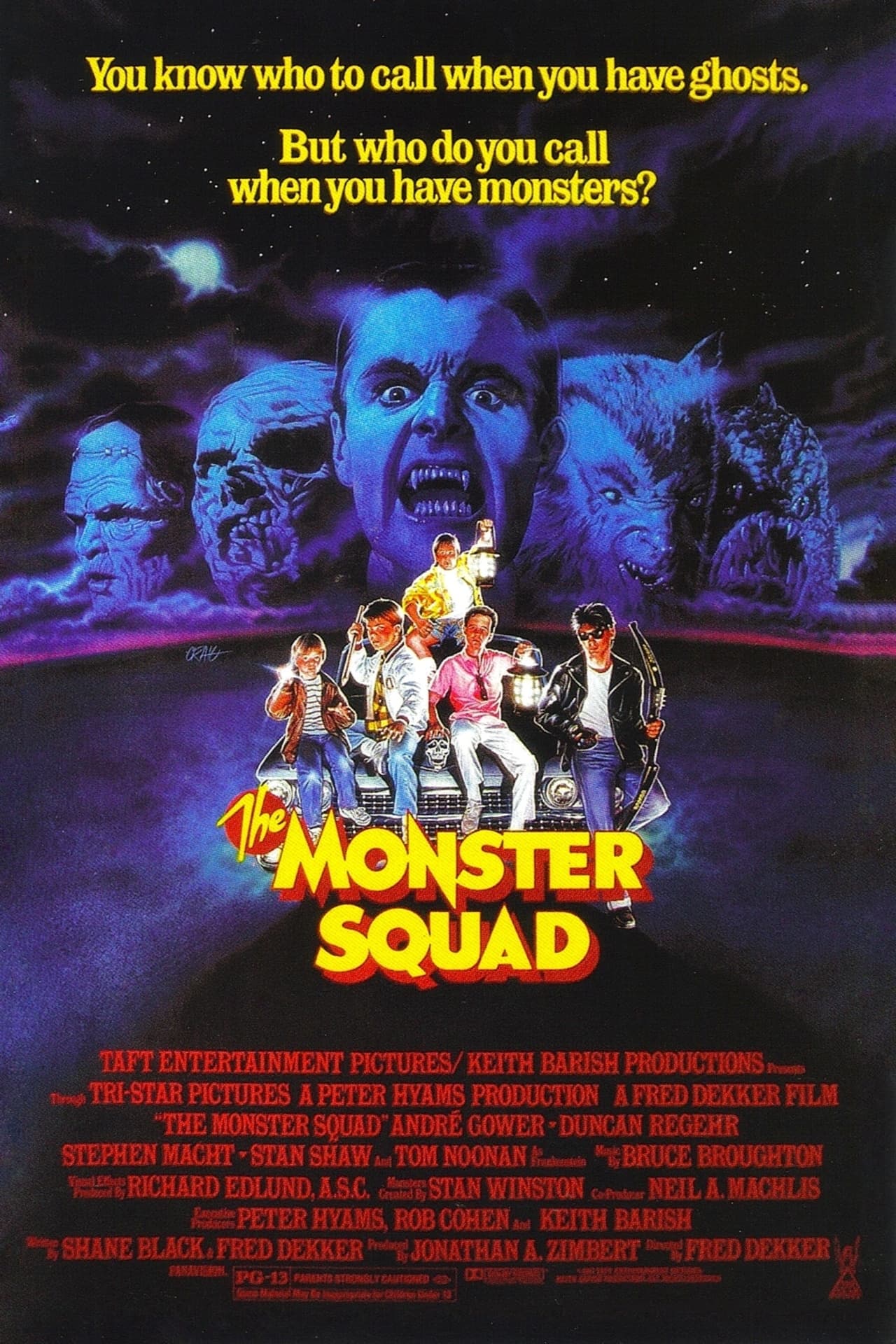
The setup
The Monster Squad is the kind of movie that smuggles a proper coming-of-age tale inside a Saturday-afternoon monster mash. Directed by Fred Dekker and running a brisk 82 minutes, it hooks you with children who actually love monster films and then makes those films matter to their lives.
THE MOVIE
Sean Crenshaw is still the reason this movie works
People keep talking about The Monster Squad because it pairs a very specific kind of childhood obsession — a suburban fan club for classic monsters — with stakes that feel genuinely urgent to its kids. The premise is simple: a group of pre-teens who collect monster memorabilia discover Dracula has come back and is pulling together the old rogues’ gallery.
What lifts the picture above mere pastiche is that its leader, Sean Crenshaw, is trying to use monster films as an escape hatch. He’s not just playing at adventure; he’s looking for a way out of his parents’ failing marriage and, in doing so, takes responsibility when adults can’t or won’t.
That mix — a director (Fred Dekker) who keeps things lean, a crisp 82-minute running time and a plot that insists childhood fantasy has real value — is why people return to it. It’s affectionate towards monsters while giving the kids the nervous, earnest centre they deserve.
THE SETUP
The idea that sets The Monster Squad in motion
The engine is the sort of adventure any eight- to twelve-year-old would sign up for: a fan club of kids who know their monsters decides they have to stop those monsters for real. Dracula’s return is the inciting twist; he’s not haunting house parties, he’s actually assembling the classic creatures again.
To stop him the Squad needs a handful of old-school MacGuffins: a Van Helsing diary written in German, a carefully hidden amulet that keeps cosmic balance intact, and a particular spoken incantation that matters at one specific moment.
The film keeps the mechanics clear without over-explaining. The kids’ investigation even forces them to consult an elderly Holocaust survivor to translate Van Helsing’s German entries — a way of grounding their fandom in an unsettlingly grown-up piece of history.
That neatness — fantasy rules you can follow, and consequences you can understand — is why the setup works as more than just a joke premise. It trusts the audience to follow the map and to care about the kids who are following it.
THE CHARACTER
Why Sean Crenshaw matters
Sean isn’t just the kid at the front of the clubhouse; he’s the hinge the movie turns on. André Gower’s character is driven by more than heroic itch — he’s trying to get away from a home life that’s falling apart, and the Monster Squad becomes the place where he can be useful and chosen.
That personal stake gives the film a humane core. Sean’s leadership is loyalty worn loudly: he’ll risk himself for friends because belonging matters to him in a way that family, at that moment, does not.
The boy-versus-adult tension is sharpened by the presence of his father, Detective Del Crenshaw, whose police work bumps up against the children’s shenanigans. The two investigations overlap and occasionally clash, which keeps the emotional register from flattening into pure kids-vs-monsters fun.
And when the movie allows the monsters to show tenderness — notably the bond between the creature and Sean’s little sister — it humanises the danger and lets Sean’s motivations feel earned rather than merely adventurous.
THE PERFORMANCE
Why Tom Noonan's performance matters
There’s a reason commentators single out the portrayals of Dracula and Frankenstein’s monster when they talk about the film: those characters get more than one-note treatment and are allowed moments that surprise.
Tom Noonan’s take on the Frankenstein figure is repeatedly noticed in genre commentary, which matters because it gives the creature a presence that isn’t merely costume and growl.
That attention helps the film balance scares and sympathy — when the monster behaves gently, the emotional stakes lift the kids’ mission into something quieter and more affecting.
In short: the monster’s moments do work, and the performance being highlighted by critics and historians is part of why those scenes register.
UNDER THE SURFACE
The Monster Squad has more on its mind than the plot suggests
On its surface it’s a monster movie; underneath it’s about kids growing up. The coming-of-age thread is constant: these are children who, for once, are trusted with the heavy lifting when grown-ups can’t quite see what’s at stake.
Friendship is the film’s emotional currency. The Squad functions as a found family — the kind of group where loyalty is louder than blood, and that solidarity is what allows them to act where adults hesitate.
There’s also genuine fandom at its heart. The kids’ love for classic creatures isn’t a joke — it’s the glue that holds their identity together, and the movie treats that nerdy devotion with affection rather than ridicule.
Finally, the family angle — particularly the father–son friction — gives the film an emotional handhold. It’s a horror-adventure that refuses to let the story be merely thrilling: it wants the monsters to mean something for the children on a personal level.
THE FILMMAKING
How The Monster Squad was put together
The filmmaking choices are quietly practical rather than flashy. Where modern blockbusters reach for digital polish, The Monster Squad leans on in-camera techniques and old-school optical work.
Contemporary coverage points to stop-motion, matte paintings, rotoscoping and pyrotechnics as the primary toolkit — a hands-on approach that gives the film a tactile, sometimes scrappy personality.
That approach suits the material: a story about kids who treasure old monsters benefits from effects that feel constructed and lived-in rather than seamless and invisible.
Fred Dekker keeps the direction tidy, letting the story breathe where it needs to and trusting the practical work to sell the uncanny.
PRACTICAL EFFECTS
The effects work that gives The Monster Squad its physical personality
This film’s look depends on techniques that predate digital trickery: in-camera stop-motion, matte paintings and rotoscoping are all in the mix, alongside pyrotechnics and makeup work.
Stan Winston’s monster-art department helped with creature design, but the team deliberately altered classic Universal silhouettes to avoid copyright problems — the Gillman, for example, nods to Creature-from-the-Black-Lagoon without copying it outright.
The monsters are realised by people in suits and prosthetics rather than pixels: performers inhabiting the Wolfman, Mummy, Gillman and Frankenstein give the creatures a physical weight.
All of which means the film feels handcrafted. The effects aren’t trying to hide; they’re part of the movie’s texture.
PURE 80S
The Monster Squad could not belong to any other decade
Released in 1987, the film fits into a late‑eighties moment when ensemble kid adventures were a familiar weekend offering. That era’s appetite for child-led quests helps explain why the movie aimed where it did.
Critics and commentators naturally pair it with the kid-adventure films of the period; the tone — equal parts mischief and peril — sits comfortably alongside those comparisons.
The film’s production, shot in Los Angeles in 1986 and released in the late-summer window of 1987, also places it in a time when family horror-adventure hybrids were being tested in theatres.
Put another way: it’s exactly the kind of film you expect from the late ’80s — a small-scale, high-spirited attempt to blend genuine affection for monsters with a kid-powered adventure.
WATCHING IT NOW
What has aged — and what hasn't
Watching it today, the practical effects and the kid cast are often the elements audiences still enjoy; those are the parts that hold up because they’re concrete and characterful rather than trendy.
The themes the film runs on — friendship and the messy work of family reconciliation — are surprisingly durable. The core idea of kids taking responsibility while navigating their own small domestic dramas still reads clearly.
That said, later commentators note the film contains certain sexual jokes and abrupt tonal shifts that feel of their time. Those moments can jar modern viewers who expect a steadier balance between humour and peril.
Overall, the pieces that grow from story and character tend to age better than the moments that trade on brief, period-specific gags.
THE LEGACY
Why The Monster Squad still matters
The movie didn’t set the world alight in cinemas, but it found new life after theatrical release. Home-video and revival screenings helped the film build a determined cult following.
That afterlife includes substantial retrospective work: a 20th Anniversary DVD packed extras and even earned a Saturn Award for Best Classic Film DVD Release, showing there’s appetite for properly archived material.
The cast itself has participated in the film’s remembrance: retrospectives and a 2018 documentary — made by a cast member — examine the movie and its fan community, underscoring that its revival wasn’t accidental.
Even recently, the title has been given attention on the preservation front, with a 4K Ultra HD / Blu-ray special edition released in late 2023, which is about as explicit a sign as you can get that the film still has active, recording fans.
THE VERDICT
Does The Monster Squad still hold up?
Yes — but with the usual caveats. If you come for a tight, 82-minute, kid-centred horror-adventure about a suburban monster-fan club that discovers Dracula and must use Van Helsing’s diary, an amulet and a spoken incantation to stop a portal, you’ll find exactly that.
The film’s heart is Sean Crenshaw: a kid driven by family trouble who leads because belonging matters. That emotional through-line — and the way the children’s agency is treated seriously — is why the movie still feels alive.
The practical effects and the tangible creature work lend it personality, and home-video supplements even document how the cast and creators treated those monsters as real presences during production, which shows in the film’s physical performances.
So watch it if you want an affectionate monster pastiche that cares about its children as much as its monsters. It’s not flawless, but it remains a compact, surprisingly sincere example of what a late‑80s kids’ horror-adventure could be.
Featured in
Explore more about The Monster Squad
Share this movie
Keep watching
More movies from the 80s
1986
Jumpin' Jack Flash
Jumpin' Jack Flash: our relationship with technology and freedom, and why this 1986 movie still matters.
Read our take →
1987
RoboCop
A murdered cop rebuilt as a product — RoboCop still asks who gets to sell justice.
Read our take →
1983
Christine
Obsession, adolescence and a car that won't let go.
Read our take →