The setup
There are a dozen moments people bring up when Say Anything... is mentioned, but none of them quite explain why the film keeps drawing you back. It’s Lloyd Dobler — earnest, directionless and stubbornly real — who turns a summer-after-graduation rom-com into something you notice long after the credits roll. Cameron Crowe’s debut pairs that stubbornness with a small domestic crisis and a soundtrack that knows exactly where to land.
THE MOVIE
Lloyd Dobler is still the reason this movie works
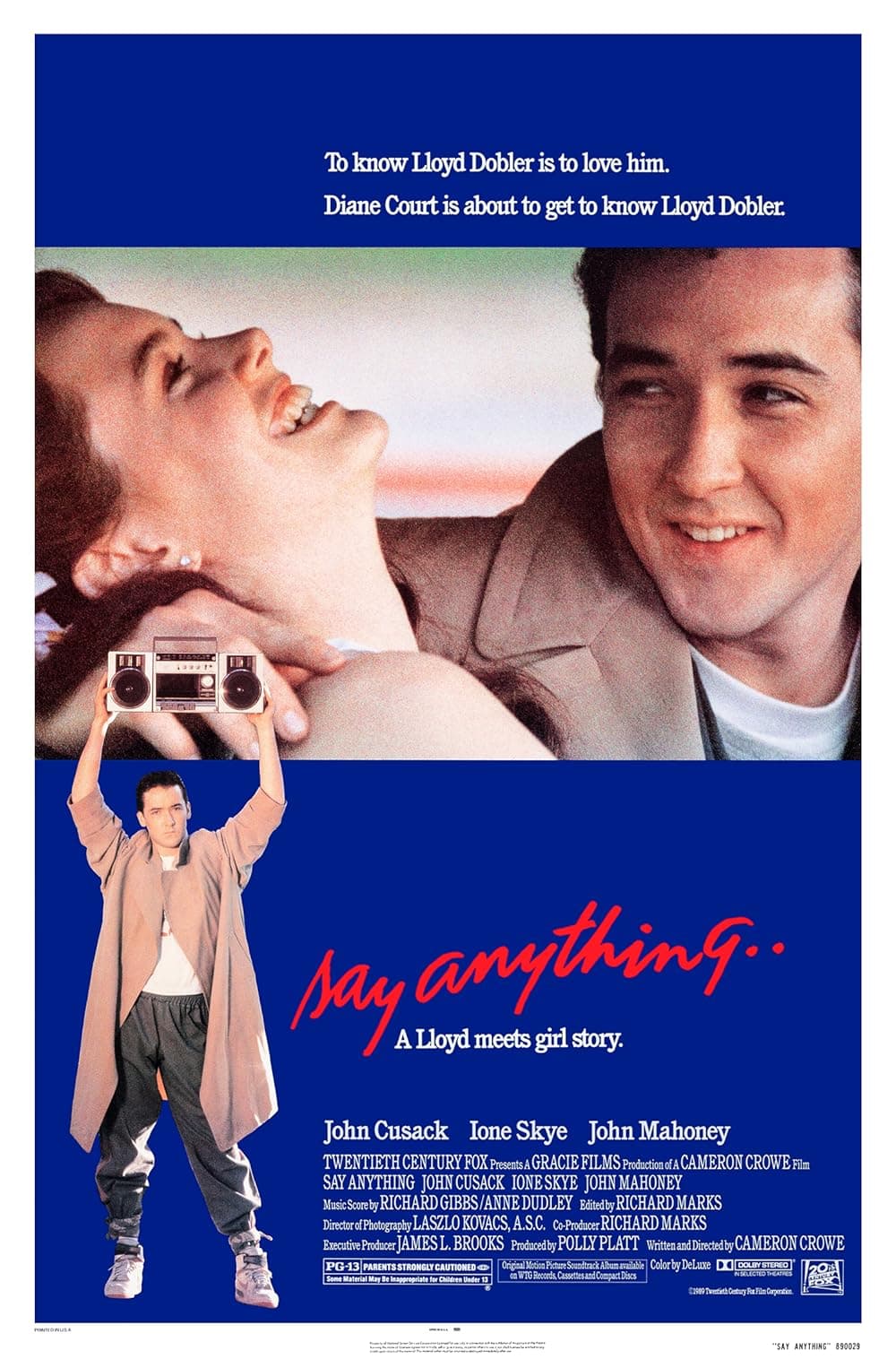
Talk about Say Anything... and people often leap to the boombox moment. Fair — it’s the image that stuck. But that single scene only matters because of who’s standing under the window: Lloyd Dobler, a recent high-school graduate who’d sooner follow his heart than chase a sensible career path.
Cameron Crowe set the story in that uneasy summer after graduation, pitching Lloyd’s blunt, emotional commitment against Diane Court’s academic future and a fellowship in England. The friction — not spectacle — is the engine: love versus different expectations, and two families that don’t quite sit at the same table.
Put bluntly: the film’s small scale is its secret weapon. Crowe made his feature debut by trusting awkward truth over polish, and John Cusack’s Lloyd is the sticky, unshowy centre that makes everything else land.
THE SETUP
The idea that sets Say Anything... in motion
You don’t need a plot summary to grasp the premise: Lloyd, who hasn’t quite figured out what comes next, falls for Diane, the driven valedictorian who’s just won a fellowship overseas. That difference — one wants to drift with feeling, the other has plans mapped out — is the basic tug-of-war.
Crowe introduces two tidy recurring locations to keep the differences visible and honest: Lloyd’s kickboxing gym and Diane’s job at her father’s retirement home. They’re not just backdrops; they’re shorthand for two lives that rub against each other.
Then comes a practical complication: Diane’s father faces an IRS inquiry that puts pressure on the family and forces Diane to choose between loyalty and independence. It’s a neat piece of real-world trouble in a movie that otherwise lives in conversations and small gestures.
And yes, the songs play a very deliberate role. The soundtrack is used to stage moments — the music isn’t decoration so much as punctuation.
THE CHARACTER
Why Lloyd Dobler matters
Lloyd isn’t the polished hero of self-help brochures. He’s earnest to the point of clumsiness and has no tidy career plan — which is the whole point. His choices come from feeling, not strategising, and that stubborn sincerity keeps the film honest.
That earnestness matters because it makes the film less about two teenagers playing roles for each other and more about one person who keeps showing up. Lloyd’s presence forces questions: will Diane pick a secure future or follow a messier, human tie?
The movie surrounds him with people who test and reflect his instincts. Corey Flood, for example, is the outspoken musician friend who acts as conscience and counterpoint — someone who points out where performative masculinity or cowardice might be sneaking in.
More broadly, Say Anything... helped cement the screen persona that John Cusack would be associated with: the left-of-centre, outsider romantic who wears sincerity like armour.
THE PERFORMANCE
Why John Cusack's performance matters
Contemporary critics singled out the way the central figure holds the film together. Roger Ebert, in particular, pointed to Cusack’s portrayal as a principal reason the movie succeeds and later placed the film in his Great Movies list.
That’s not name-dropping for prestige; it’s evidence that Lloyd’s believable, stubborn humanity was recognised as the film’s anchor from the start.
Which matters here: the movie invites you to accept an underachiever as a compelling romantic lead, and its critical reception shows that choice paid off.
UNDER THE SURFACE
Say Anything... has more on its mind than the plot suggests
On the surface it’s a coming-of-age romance — two young people trying to figure out where to go next — but the film keeps folding in quieter, thornier concerns.
There’s the class and cultural mismatch: Lloyd’s rudimentary future versus Diane’s clearly arranged academic path. Those opposing rhythms create the film’s emotional friction.
Then there’s the recurring question of authenticity versus performance. Much of the drama comes from whether gestures are honest acts of feeling or theatre designed to impress.
Finally, the family subplot — an IRS probe into Diane’s father — nudges the story into grown-up territory, forcing choices about loyalty, compromise and what adulthood actually looks like.
THE FILMMAKING
How Say Anything... was put together
Crowe assembled a compact team to realise a very human-sized film. The movie credits László Kovács as director of photography, Richard Marks as editor and Mark Mansbridge as production designer, which tells you Crowe wanted experienced hands shaping the material.
That combination did something simple but important: it let the performances and small domestic tensions breathe rather than overwhelm the story with showy technique.
The production also served as a calling card: Say Anything... launched Crowe as a director and helped define the kind of leading man John Cusack would become in films to follow.
PURE 80S
Say Anything... could not belong to any other decade
Released at the very end of the 1980s, the film belongs to a moment when teen and young-adult pictures were shifting toward more realistic, character-driven relationships instead of broader, gag-led comedies.
Say Anything... sits squarely in that late-80s trend: it prefers conversation and awkward intimacy to punchlines, and that restraint feels very of-a-piece with the era’s more grown-up teen dramas.
It also helped define a particular late-80s screen persona: John Cusack became shorthand for the slightly off-centre, earnest young man — a through-line from earlier titles like The Sure Thing into the early 1990s.
WATCHING IT NOW
What has aged — and what hasn't
Here’s the brisk version: the film’s focus on conversation, awkward honesty and the messiness of ordinary choices still feels sharp. That’s largely because the emotional questions — who do you become, and what are you willing to compromise for family or love — are timeless.
The IRS subplot, oddly practical, helps the movie avoid being a two-person fantasy and keeps Diane’s choices grounded in real responsibility. That pragmatic pressure still gives the story teeth.
As for the film’s era, it reads as late-80s in its casting and persona choices, but those specifics don’t date the central argument. The person-versus-plan tension remains recognisable to a modern viewer.
If anything shows its age, it’s the way certain social cues and expectations move at a slower pace than they would today; but narratively the film’s questions about authenticity and commitment remain useful.
THE LEGACY
Why Say Anything... still matters
The image everyone remembers — Lloyd outside a window with a boombox and Peter Gabriel on the soundtrack — became shorthand for a certain kind of public, desperate romantic gesture. That single scene has lodged itself in pop culture as a reference point.
Beyond one image, the movie also matters because it launched careers: it introduced Cameron Crowe as a director to watch and helped crystallise the type of leading role John Cusack would often be offered. It’s also found its way onto various retrospective best-of lists.
There was even a later proposal to adapt the story for television, which never reached production, but it speaks to how the movie’s premise continued to feel interesting to people long after 1989.
THE VERDICT
Does Say Anything... still hold up?
Short answer: yes. Not because of nostalgia, but because its central argument — that being honest and present matters even when there’s no tidy plan — still reads as persuasive.
The film earns that conclusion by setting real stakes: Diane’s fellowship and the IRS trouble make the romance a negotiation of future and duty, not mere flirtation. Lloyd’s refusal to perform a version of himself for social advantage keeps the relationship rooted in something messy and human.
The boombox moment remains the clearest visual shorthand for the movie’s faith in gesture, and it still works because the film has already persuaded you Lloyd’s gestures matter. Roger Ebert and other contemporary reviewers singled out Cusack’s presence as a key strength — and that critical recognition wasn’t accidental.
So see it if you want a romantic movie that argues for sincerity over simplicity. It’s 100 minutes of awkward honesty, small moral tests and the peculiar bravery of someone who shows up even when they’ve no script to follow.
Share this movie
Keep watching
More movies from the 80s
1986
Jumpin' Jack Flash
Jumpin' Jack Flash: our relationship with technology and freedom, and why this 1986 movie still matters.
Read our take →
1987
RoboCop
A murdered cop rebuilt as a product — RoboCop still asks who gets to sell justice.
Read our take →
1983
Christine
Obsession, adolescence and a car that won't let go.
Read our take →