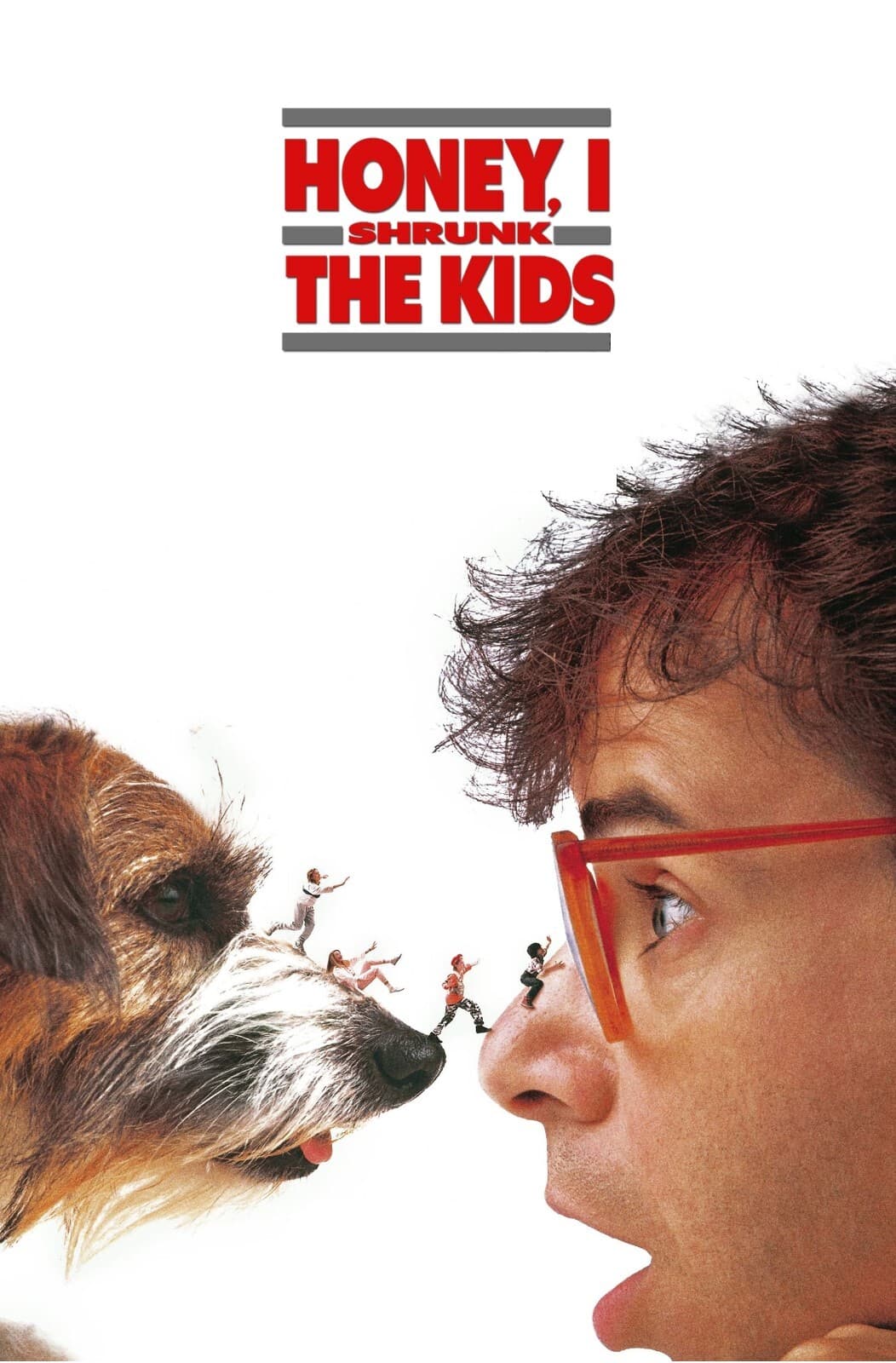
Honey, I Shrunk the Kids
A shrinking accident, a towering backyard and one very distracted inventor.
The setup
Honey, I Shrunk the Kids still feels like a neat trick: take a suburban garden, tilt the scale, and suddenly everyday things become proper threats. At the centre of the delightful mess is Wayne Szalinski — an inventor whose curiosity starts an accidental adventure and gives the whole film its beating heart.
THE MOVIE
Wayne Szalinski is still the reason this movie works
There are two quick ways to summarise Honey, I Shrunk the Kids: a suburban inventor misfires his experiment, and four children wake up the size of crumbs. But that tidy logline misses the more useful truth — the film is really built around the personality at its centre, and that personality is Wayne Szalinski.
Wayne is the sort of well-meaning, obsessively tinkering inventor whose head is permanently in his machines; that single trait both causes the accident and keeps the family on edge. The shrinking device’s accidental activation sends the kids into a backyard suddenly rendered monstrous, and the movie’s stakes come as much from parental distraction and domestic tension as from any external villain.
Joe Johnston made his feature directorial debut with this picture, and he chooses to lean into the premise: tight, 93-minute family entertainment that marries sci-fi gags to a story about responsibility. Rick Moranis plays Wayne Szalinski, and the film centres on how a creative curiosity turns into a family crisis.
THE SETUP
The idea that sets Honey, I Shrunk the Kids in motion
The film’s inciting moment is admirably simple: the shrinking device fires by accident and reduces the children to about a quarter of an inch in height, whisking them out of the house and into a suddenly hostile backyard.
From there the central conflict is straightforward and effective: the kids must survive and find their way back while the parents frantically try to reverse the accident. That race — survival one way, reverse-engineering the other — keeps the film moving without overcomplicating matters.
What gives each sequence its shape is the practical logic of scale. Instead of inventing new antagonists, the film repurposes ordinary suburban items — Cheerios, grass blades, a lawnmower, a dog — as set-piece hazards. The comedy and suspense spring from how the world shifts when a teaspoon is now a cliff edge.
The setup isn’t coy about its family-audience DNA: it’s an adventure tuned to be clear, kinetic and easy to follow, with sequence logic driven by changing perspective rather than complicated plot mechanics.
THE CHARACTER
Why Wayne Szalinski matters
Wayne Szalinski isn’t just the plot engine; he’s the emotional fulcrum. He’s presented as a kindly but work-absorbed inventor whose obsession with experiments strains his domestic life — and that strain makes the accident feel like a consequence, not a random gag.
The film pairs Wayne’s head‑down tinkering with Diane Szalinski’s pragmatic distance. That dynamic gives the adventure a moral anchor: it’s less about punishing curiosity and more about reminding a family to notice each other.
On the children’s side, Amy steps up as the responsible older sibling, protecting her younger brother Nick when the stakes go up. That shift — kids forced into responsibility when adults are momentarily absent — is the emotional pay-off threaded through the comedy.
Because the movie keeps family at the heart, Wayne’s mistakes matter beyond slapstick. His curiosity initiates the crisis, but the story continually returns to how those personal choices ripple through a household.
THE PERFORMANCE
Why Rick Moranis's performance matters
Contemporary coverage singled out Rick Moranis’s presence in the centre of the film. Reviewers noticed that the picture needs a believable, sympathetic inventor to keep the comedy grounded, and Moranis provides that central figure.
That critical reaction is important because the movie asks viewers to forgive a fairly serious mishap — children reduced to insect size — only if the inventor feels sincere rather than cruel. The way the film’s reception singled out its central presence suggests it succeeded at that task.
UNDER THE SURFACE
Honey, I Shrunk the Kids has more on its mind than the plot suggests
On the surface it’s a jokey adventure about tiny kids dodging giant hazards. Underneath, the film keeps returning to family and parental responsibility: the children’s peril is narrated as a consequence of adult inattention and domestic friction.
There’s a second, companion idea — the hazardous results of scientific curiosity. Wayne’s experiments are enthusiastic and earnest, but they also carry unintended consequences; that tension between invention and care is the engine of the story.
Scale and perspective aren’t just visual tricks here; they’re thematic devices. Shrinking the kids forces viewers to look at the ordinary from a different angle, reframing a suburban backyard as something like a wilderness the family must reckon with.
Because those themes are simple and well-specified, the film stays readable for family audiences while still offering a surprisingly sturdy emotional spine beneath its set pieces.
THE FILMMAKING
How Honey, I Shrunk the Kids was put together
The movie’s look comes from a clear decision to make the backyard feel enormous and immediate. The production designer and director of photography worked with large-scale set dressing and a lighting approach aimed at selling those giant, domestic environments.
Technically, the picture blends several kinds of material: full-size actors on oversized props, second-unit plates, blue-screen optical work and reductions using Vistavision to composite elements together. That mix is what lets human performances sit believably against the big built pieces.
Contemporary critics tended to like this visual approach; reviews singled out the production design and visual ambition as strong points even when they quibbled about performance or tone. In short, the filmmaking makes the premise feel tangible rather than simply jokey.
For a director on his first feature, those choices give the film a confident, practical personality: it trusts physical artifice and cinematic craft to sell a playful but occasionally perilous idea.
PRACTICAL EFFECTS
The effects work that gives Honey, I Shrunk the Kids its physical personality
A lot of the film’s charm is tactile because the effects are physical: a dedicated visual- and mechanical-effects team coordinated puppetry, models and practical builds rather than leaning solely on digital tricks.
Production constructed enormous props — a ten‑foot cookie, 40‑foot grass blades and oversized Cheerios — and even staged sequences in a 16,000‑gallon milk tank for the cereal scene. Those choices make the miniature world feel materially present.
There’s also creature work: the team built a giant mechanical ant that required around a dozen puppeteers, and stop‑motion was used alongside live-action to realise certain ant-riding moments. The effect is a mix of hands-on engineering and old-school animation.
Altogether, the film combines live puppetry, mechanicals, stop‑motion and optical compositing to sell the children’s tiny world. It’s a very crafted kind of filmmaking: practical, collaborative and, frequently, delightfully physical.
WATCHING IT NOW
What has aged — and what hasn't
Seen today as a family film, the picture still plays its cards clearly: it’s built to entertain children while giving adults a simple story about responsibility to follow. That straightforwardness is an asset for contemporary family viewing.
The movie’s themes — family responsibility and the hazards of unexamined curiosity — remain readable without needing extra context. They’re plain ideas and the film delivers them without cleverness for its own sake.
Some viewers will watch for the practical imagination: physical props and creature work lend the movie a distinct, analogue flavour that stands apart from modern effects-heavy family pictures.
The film also left enough of a footprint to spawn sequels and a TV show, which says something about its longevity as a family property even if later entries landed in different formats and quality levels.
THE LEGACY
Why Honey, I Shrunk the Kids still matters
Part of the film’s afterlife is simply that it became a franchise: a theatrical sequel, a direct‑to‑video follow-up and a syndicated TV series kept the Szalinski family in circulation through the 1990s.
The film’s visual-effects team also received formal recognition, winning a BAFTA for special visual effects, which highlights how the industry at the time regarded the picture’s technical achievements.
For Joe Johnston, the film marked a clear transition from effects and art-direction work into directing. His successful start with an effects-driven family movie gets mentioned in career overviews as the debut that established his feature directing path.
So the movie matters both as a piece of family entertainment and as a professional milestone: it proved a concept could be built around a practical effects play and a likable, if distracted, inventor.
THE VERDICT
Does Honey, I Shrunk the Kids still hold up?
Yes — with a couple of sensible caveats. If you watch it as a tight, 93‑minute family adventure about an inventor who accidentally shrinks his kids, it still does the job it sets out to do: clear stakes, a sequence-driven logic, and a handful of memorable set pieces where everyday things become survival challenges.
The central dramatic bargain is straightforward: Wayne Szalinski’s curiosity causes the crisis, Diane’s pragmatism sharpens the stakes, and Amy and Nick’s tiny odyssey gives the story its emotional propulsion. That domestic core keeps the effects from feeling empty spectacle.
The physical craftsmanship — oversized props, puppetry, stop‑motion and compositing — gives the film a tactile personality that many viewers still enjoy. And because the picture wears its family focus on its sleeve, it remains approachable for contemporary family audiences.
If you haven’t seen it for a while, watch it for the way a single, slightly daft idea is stretched into a properly engineered bit of filmmaking: small children, big problems, and an inventor who forgot to look up until it was too late.
Share this movie
Keep watching
More movies from the 80s
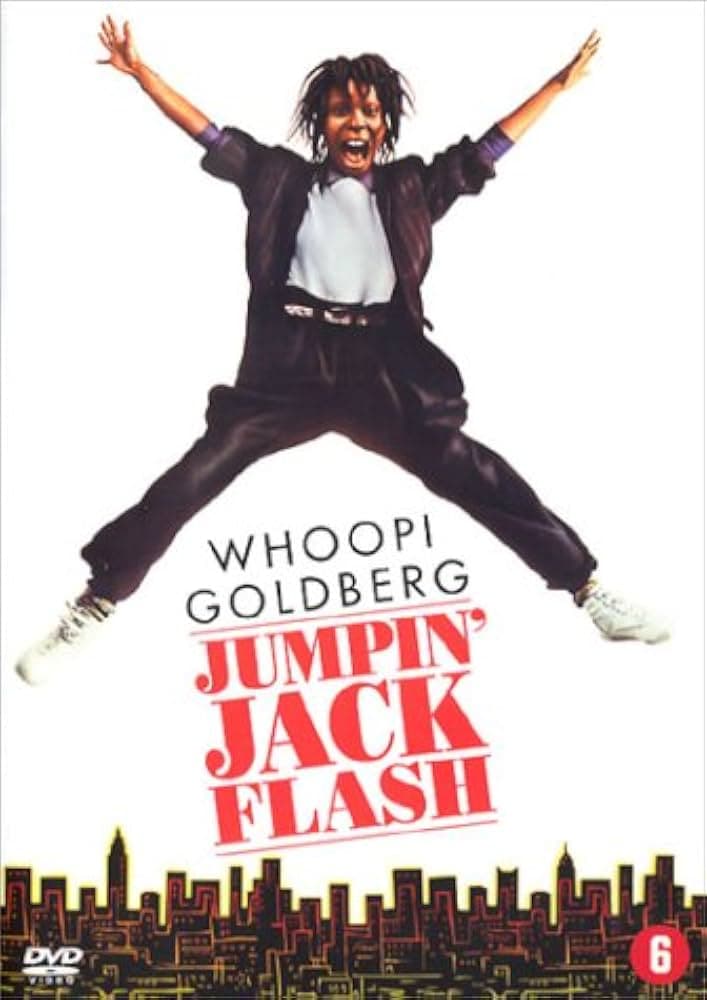
1986
Jumpin' Jack Flash
Jumpin' Jack Flash: our relationship with technology and freedom, and why this 1986 movie still matters.
Read our take →
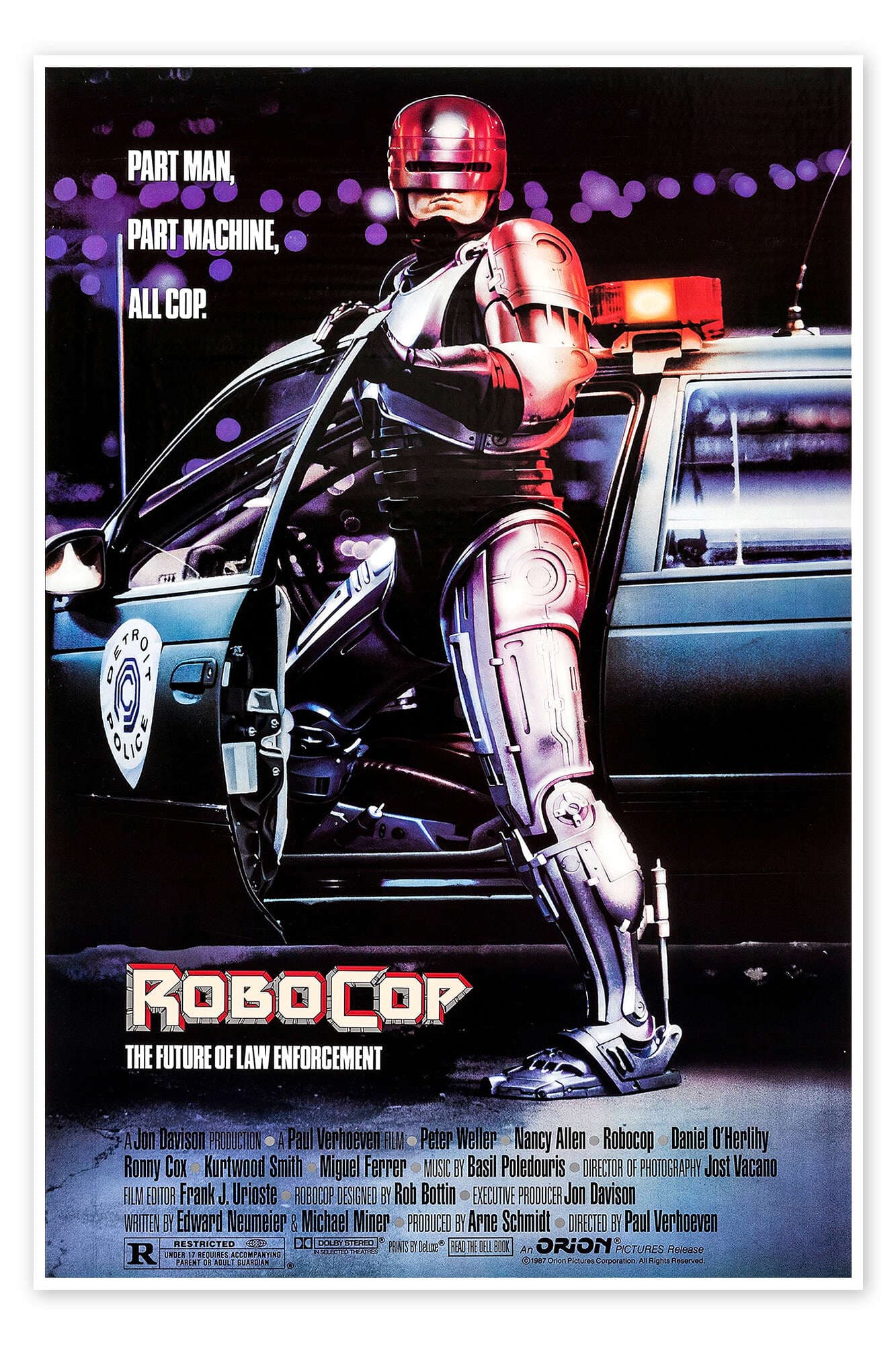
1987
RoboCop
A murdered cop rebuilt as a product — RoboCop still asks who gets to sell justice.
Read our take →
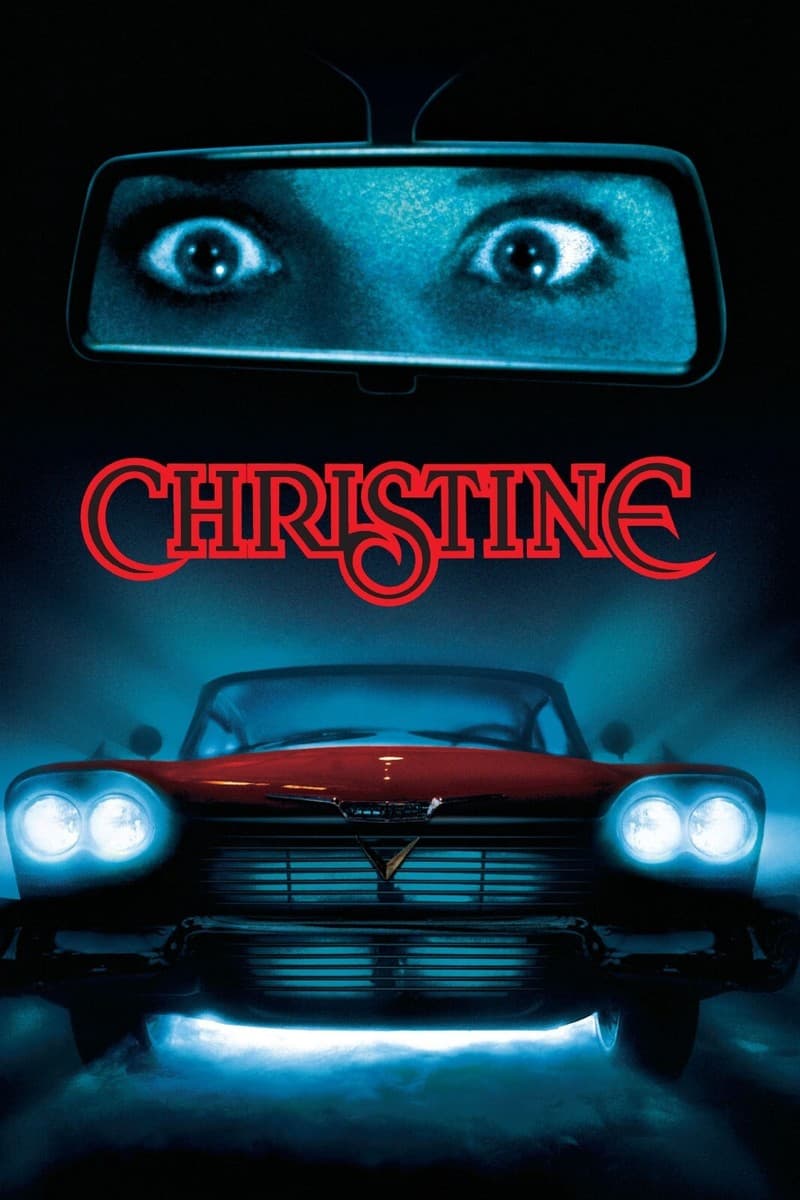
1983
Christine
Obsession, adolescence and a car that won't let go.
Read our take →