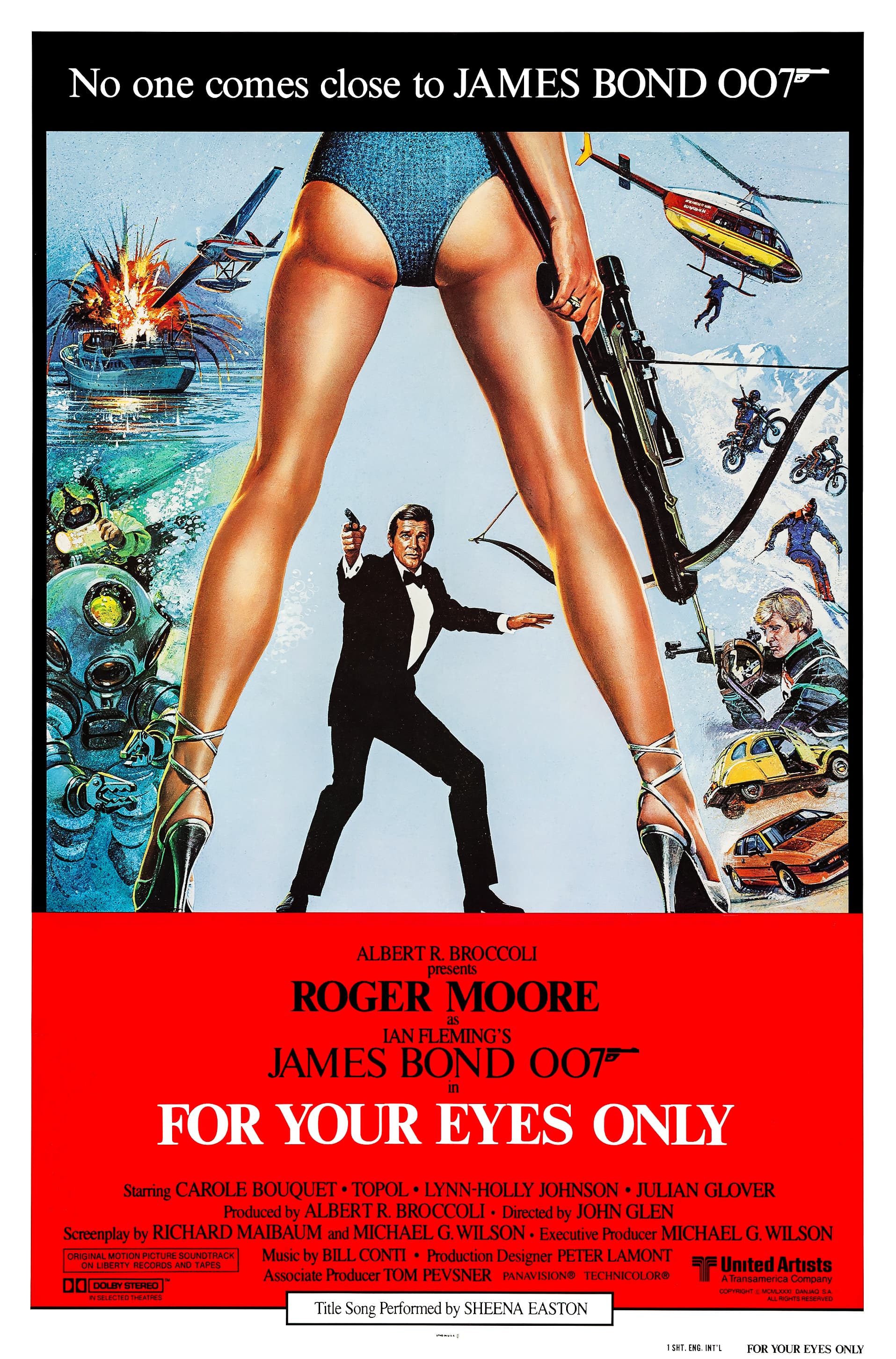
For Your Eyes Only
A quieter Bond with teeth — revenge, a sunken spy ship and surprisingly human stakes.
The setup
For Your Eyes Only is the Bond film that walks away from spacey spectacle and asks for something tougher: a missing targeting device, a daughter bent on vengeance and a mission that’s as much about trust as it is about gadgets. John Glen’s 1981 entry puts James Bond into a world of sunk ships, double-dealers and practical set pieces — and asks whether the spy can still cut it without the usual razzmatazz.
THE MOVIE
James Bond is still the reason this movie works
There’s something tidy and slightly old-fashioned about this Bond: a clear mission, a clear villainy to stop and a stubbornly human spur at the heart of it. For Your Eyes Only sends Bond after the ATAC — a weapons-targeting device lost with the sunken British surveillance ship St. Georges — and that single, practical objective keeps the film admirably focused.
What lifts the plot out of routine cold-war plumbing is the human cost that kicks everything off: the murder of Sir Timothy Havelock and his wife, which drags their daughter Melina into the story and gives the film a raw, personal engine. Her need for vengeance hooks Bond into something messier than a standard briefing.
John Glen was at the helm for his first Bond feature and he chose to steer the series back toward grounded spycraft. With Roger Moore as 007 and Carole Bouquet as Melina, the movie trades extravagant gadgetry for tense loyalties and a series of practical confrontations — and Bond, as ever, is the hinge that makes it all hang together.
THE SETUP
The idea that sets For Your Eyes Only in motion
The engine of the film is straightforward: recover the ATAC from the wreck of the St. Georges before it can be exploited. That tidy objective gives the story something both urgent and easy to follow — you always know what Bond is trying to stop.
What complicates the salvage mission is the company Bond keeps and the people who want the device for their own ends. Bond and his allies locate and dive on the wreck, then find themselves fighting to defend the ATAC from rival Greek crime figures and a treacherous intermediary.
Aristotle Kristatos presents himself as a useful contact but the real drama comes from not knowing who’s playing which side. The film’s tension rests on that duplicity: is this helpful hand really helpful, or a clever bit of double-dealing?
THE CHARACTER
Why James Bond matters
Roger Moore’s Bond is the practical pivot of the film: he’s sent by the British government with a simple brief — get the ATAC back and stop a weapons-control catastrophe. That clarity suits this stripped-back entry; Bond doesn’t have to decode a grand plan so much as outwork a tangle of local players.
The film gives Bond something useful to do rather than spectacle to lean on. He’s operating in a landscape where allies can turn into enemies and vice versa, which makes his tradecraft — and his ability to pick friends carefully — feel important again.
Characters around him are built to test him. Milos Columbo is an earthy local operator whose relationship with Bond shifts from suspect to ally as the true villainy surfaces, which forces Bond to judge people rather than simply outgun them.
That keeps the focus where it should be: Bond as the man who has to make the right call in ambiguous situations. It’s a reminder that a spy story works best when the spy has to think, not just survive another stunt.
UNDER THE SURFACE
For Your Eyes Only has more on its mind than the plot suggests
On the surface this is a tidy recovery-and-defend thriller. Under the surface, the film is running a quieter set of ideas: revenge, the slipperiness of loyalties, and a conscious move away from gadget-laden fantasy toward a grubbier realism.
Revenge is the clearest emotional chord. Melina’s journey is driven by the murder of her parents and that personal vendetta gives the movie a moral weight Bond rarely had to carry in his more jokey outings.
Espionage here feels like a neighbourhood contest rather than a game of world-conquering chess. Double-dealing matters more than doomsday machines. That shift means the film’s surprises are about who you can trust, not how flashy the villain’s lair is.
Finally, the movie stages a debate about spectacle: it deliberately leans toward low-tech realism rather than high-concept gadgetry, which lets ordinary dangers — a dive, a ski pursuit, a remote aircraft used as a weapon — feel immediate and threatening.
THE FILMMAKING
How For Your Eyes Only was put together
A big part of the film’s identity comes from the crew behind the camera. Alan Hume is credited as director of photography and Peter Lamont as production designer, and their steady hands keep the movie grounded rather than glitzy.
That groundedness is reinforced by the choice to shoot on real locations — from Corfu to Cortina — and to blend those settings with stage work when necessary. The result is a film that feels lived-in: the action happens in recognisable places and the technical choices serve the story, not spectacle for its own sake.
John Glen’s direction, on his first Bond feature, makes those practical choices feel like a coherent approach rather than a limitation. The movie’s identity is quietly professional: you get competence in the craft, which in a spy film can be just as satisfying as showmanship.
PRACTICAL EFFECTS
The effects work that gives For Your Eyes Only its physical personality
For Your Eyes Only favours hands-on solutions. The underwater scenes were handled by a dedicated diving unit and matched with tank work on Pinewood’s 007 stage, which keeps the subaquatic moments feeling physically present rather than achieved purely in post.
When winter fell short in Cortina, production shipped snow in and relied on specialised ski photography units. That kind of practical problem-solving shows on screen: the mountain sequences feel purposeful because they were constructed in the cold and for the camera.
Major set pieces — the ski chases and car work — are built around conventional stunt craft. A special unit tackled ski photography, giving those pursuits a kinetic authenticity that aligns with the film’s preference for tangible thrills over sci‑fi contrivances.
All of this feeds the film’s personality: it’s an object you can touch rather than a sequence of digital glints. The physical production choices match the story’s steadier, less fantastical tone.
PURE 80S
For Your Eyes Only could not belong to any other decade
This is very much a 1981 Bond. It arrived after the ballooning escapism of Moonraker and deliberately pulled the series back to earth. That tonal reset — swapping out cosmic spectacle for grit and sneaky politics — is one of the film’s defining choices.
The film was shot in a variety of European locations and at Pinewood between the autumn of 1980 and early 1981, which gives it an international texture that’s very of its moment: globe‑trotting without the need for outlandish invention.
Eon Productions and United Artists handled the picture and it opened in late June 1981, arriving at a point when audiences were ready for a Bond who could still surprise without relying on ever-bigger gimmicks.
Put simply: For Your Eyes Only belongs to an early‑80s moment when the series needed to remind viewers that spycraft could be intimate, physical and oddly domestic — a posture that feels distinct from both the 70s and the later, flashier Bond films.
THE LEGACY
Why For Your Eyes Only still matters
Part of the film’s afterlife is musical: the title song, performed in the main sequence, earned an Academy Award nomination for Best Original Song. That concrete recognition keeps the film in later conversations.
More importantly, this film is remembered as John Glen’s first Bond, the one that launched his long run directing the series. Glen would go on to make several more Eon entries, so For Your Eyes Only serves as the start of a distinctive directorial streak.
Critics and retrospectives also tend to single the movie out for its lower‑tech approach. It was one of the first Bond main-title sequences to actually show the theme performer on screen, and the picture’s preference for practical set pieces over flamboyant gadgetry is a recurring talking point.
THE VERDICT
Does For Your Eyes Only still hold up?
Yes — if what you want is a Bond picture that tightens his belt and gets down to spycraft. The plot is centred and practical: recover the ATAC from the sunken St. Georges and stop it falling into the wrong hands. That gives the film a clear purpose that many later Bond entries lack.
The murder of Sir Timothy Havelock and his wife, and Melina’s consequent need for vengeance, supplies genuine emotional fuel. She isn’t background wallpaper; her pursuit of her parents’ killer drags Bond into a more personal, sometimes uncomfortable, collaboration.
The story’s pleasures are hands-on: diving for the wreck, defending the recovered device from rival Greek figures and navigating the treachery of a seemingly helpful intermediary. The tension about who’s betraying whom — Kristatos’s duplicity — is the narrative gear that keeps things turning.
Practically speaking, the film’s set pieces — the ski chase, an enclosed‑suit underwater fight and the odd weaponised remote-controlled helicopter — are chosen for grit rather than flash. If that sounds like a relief after a diet of ever-bigger gadgets, this is the Bond to pick. It’s a 127‑minute reminder that good spycraft can be just as entertaining as high concept villainy.
Share this movie
Keep watching
More movies from the 80s
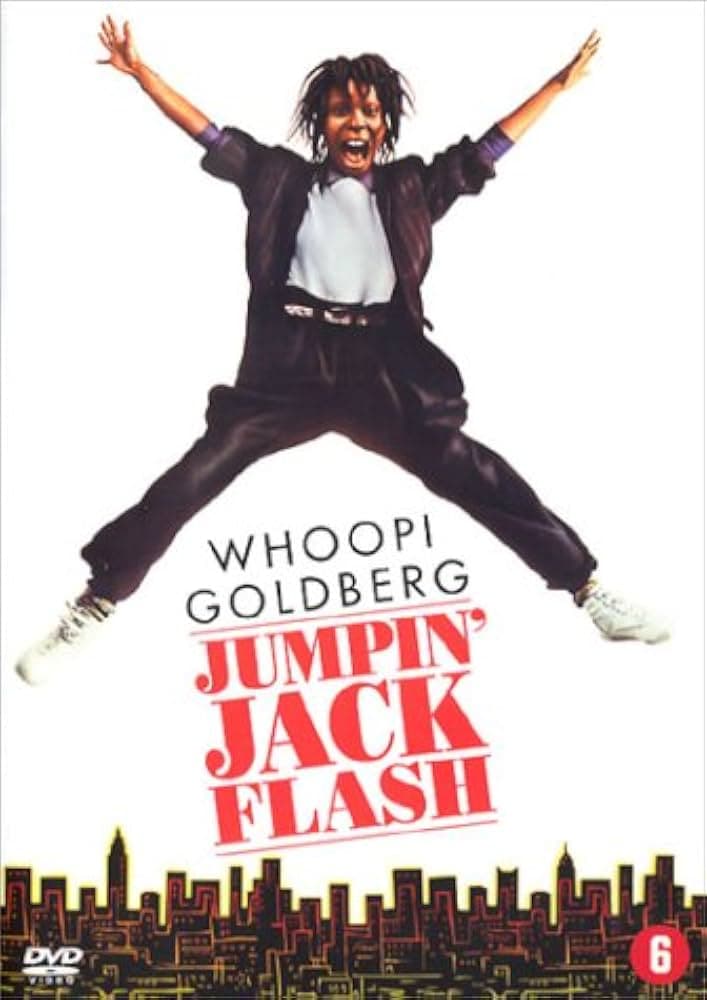
1986
Jumpin' Jack Flash
Jumpin' Jack Flash: our relationship with technology and freedom, and why this 1986 movie still matters.
Read our take →
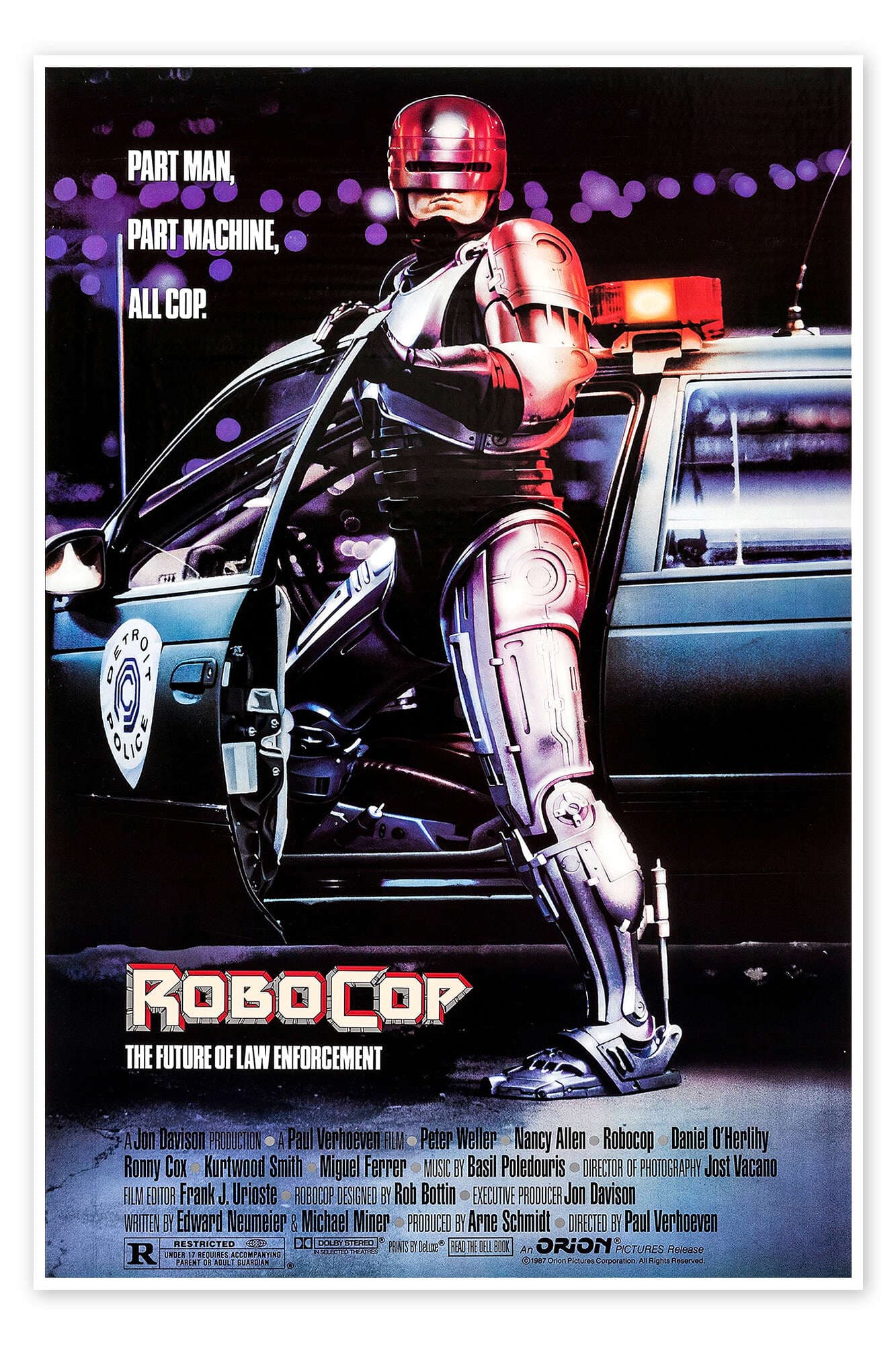
1987
RoboCop
A murdered cop rebuilt as a product — RoboCop still asks who gets to sell justice.
Read our take →
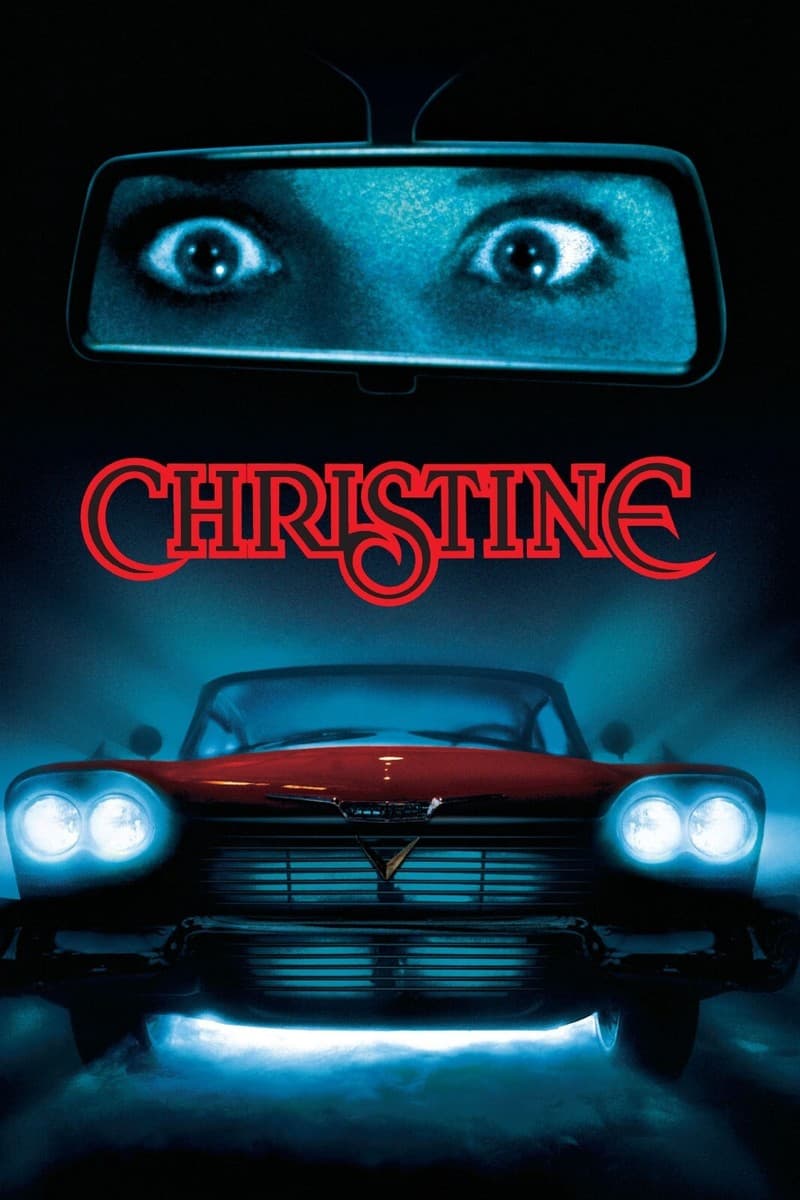
1983
Christine
Obsession, adolescence and a car that won't let go.
Read our take →