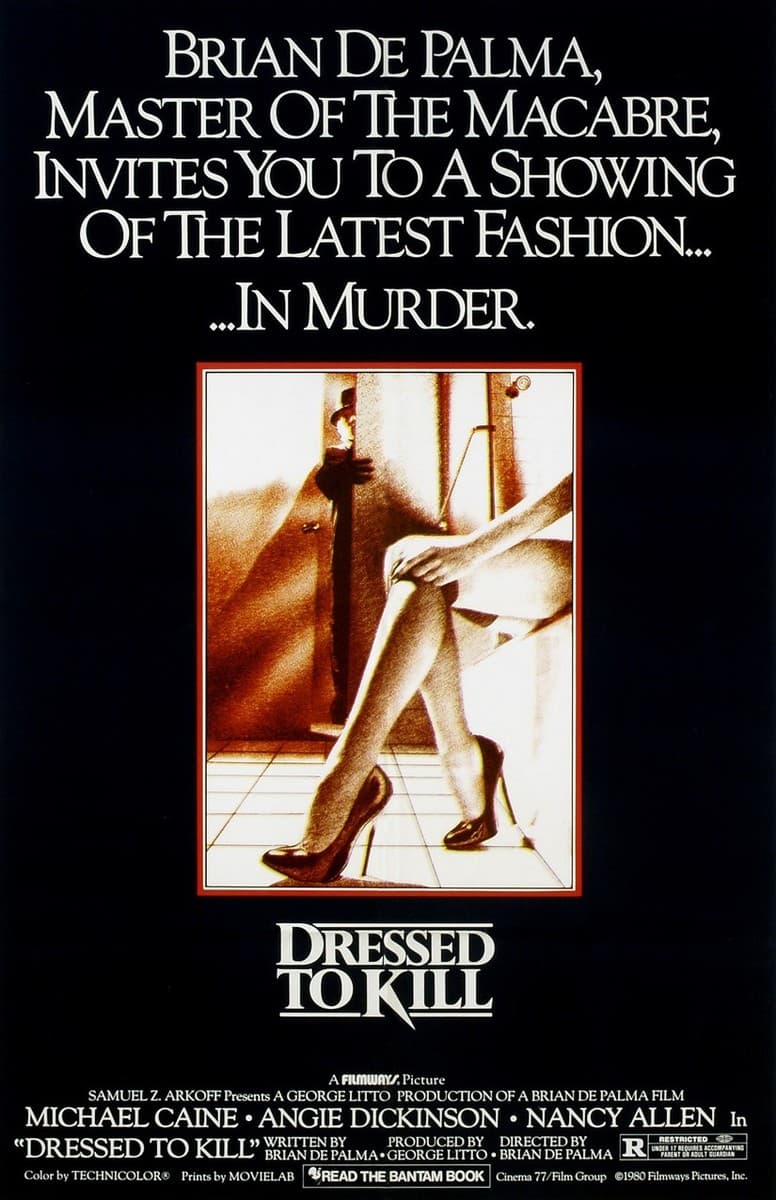
The setup
Dressed to Kill throws you straight into a violent, gossipy little machine: an elevator murder, a shaken witness and a single investigation that keeps ricocheting between desire and identity. Brian De Palma’s 1980 thriller is as much about who’s looking as it is about who did it — and Dr. Robert Elliott is the polite centre everyone keeps orbiting.
THE MOVIE
Dr. Robert Elliott is still the reason this movie works
Say the title and most people picture that elevator murder — a quick, brutal shock that detonates the whole thing. It isn’t just a flourish: that killing is the engine. Everything that follows is routed through the fact that someone watched, someone died and the comfortable surface of a Manhattan building has been split open.
Out of that rupture comes Liz Blake, a high-end escort who sees what happens and is suddenly both witness and suspect. Her job makes the police look sideways, so she finds herself doing the sleuthing the official investigation won’t. Pragmatism keeps her moving: survive, explain, clear your name. It’s the movie’s hard-headed motor.
And at the centre sits Dr. Robert Elliott — the composed, upper-middle-class psychiatrist who unpeels private lives inside his clinic. The film isn’t only a whodunnit; it’s a study in watching and being watched. De Palma’s camera delights in the act of looking, and Elliott’s calm presence is the place the film keeps returning to.
THE SETUP
The idea that sets Dressed to Kill in motion
You don’t need a spoiler to grasp the setup: the film begins with a single violent act — the elevator murder of Kate Miller — and the narrative ripples outward from there. It’s tidy and brutal; tidy because it gives the plot a compact starting point, brutal because that shock opens every character’s private life to suspicion.
Liz Blake’s eyewitnessing is crucial. She isn’t a bystander in any sentimental sense: she’s a working woman whose testimony is automatically complicated by her profession. That complication sends the story in a useful direction — the official investigation hesitates, and the characters who refuse to trust official hesitation have to take the lead.
The movie’s investigation soon points at the domestic and professional world of Dr. Robert Elliott. His practice, his patients and his private relationships become the structural meat of the mystery. The idea that a therapist’s consulting room could be a site of secrets gives the thriller an intimate, claustrophobic spine.
So the setup works because the plot always feels surgical — an event, a witness who’s not believed, and a search that pulls loose the private lives behind respectable doors.
THE CHARACTER
Why Dr. Robert Elliott matters
Dr. Robert Elliott is the movie’s polite fulcrum. He’s introduced as a composed, upper-middle-class psychiatrist whose consulting room is a staging area for other people’s secrets. That domestic propriety makes everything that touches him feel more unsettling; the ordinary becomes a magnifying glass.
Because the investigation keeps circling his life, Elliott is never just a suspect on a list. He’s the architecture around which the mystery is built: his patients, his routines and his relationships feed the narrative. The plot depends on his private life being plausibly layered enough to hide things.
In other words, he matters because the film constructs its drama through him. Where other thrillers scatter clues across the city, Dressed to Kill funnels them into a single, tidy professional world — and that concentration makes the movie feel surgical.
That role also shifts the film’s register: this isn’t a street-level chase or a police procedural so much as a drama about exposure inside respectable bounds. Elliott is the polite surface the camera keeps returning to, and polite surfaces are often the first to crack.
THE PERFORMANCE
Why Michael Caine's performance matters
Contemporary critics singled out Michael Caine for giving Elliott a restrained presence. That controlled, unshowy register matters because the role asks the audience to suspect calm rather than accept it at face value.
A therapist who appears composed makes the film’s prying camera work feel sharper; the contrast between a steady public self and a private life that might conceal danger is the point. Caine’s measured approach lets the surrounding formal flourishes — the cameras, the mirrors, the doubles — do heavy lifting.
So the critical notice the performance received is not merely trivia. It’s a practical piece of the picture: Elliott’s composure is the film’s pressure point, and the way the role is played helps the movie keep its balance between surface and secret.
UNDER THE SURFACE
Dressed to Kill has more on its mind than the plot suggests
On the surface it’s a thriller about a murder and an investigation. Underneath it’s obsessed with the act of looking. De Palma repeatedly frames scenes so that desire and violence are mediated through watching and being watched — the audience is put in the line of sight, and that implicates us.
The film also loves doubles. Mirrors, lookalikes and split-screen compositions keep asking whether identity is fixed or simply layered. Those repeated visual echoes turn the mystery into a puzzle of selves rather than just motives.
Closely linked to those ideas is the way the movie stages sexual life. Private fantasies and repressed impulses are shown to have public consequences; erotic expression and sexual repression collide, and the collision becomes part of the drama.
Finally, the film’s treatment of gender and violence is unavoidable in any modern conversation about it. The picture has been widely discussed for how it connects gender-transition imagery with violent pathology, and that aspect continues to be central to critical debate.
THE FILMMAKING
How Dressed to Kill was put together
De Palma’s fingerprints are all over the staging. He builds long, choreographed set pieces — the elevator incident and a major museum/gallery sequence are the two most obvious examples — where camera movement and rhythm are deliberately on show. The set pieces feel constructed so you notice the construction.
That approach is part of the film’s personality. It’s not a fly-on-the-wall thriller; it’s a show about looking that invites formal spectacle. The film’s widescreen frame gives those sequences room to breathe, and the museum setting in particular becomes a kind of theatrical tableau.
We should also name a few of the practical collaborators: Ralf Bode handled cinematography and the composer Pino Donaggio supplied the score. Those elements combine with De Palma’s direction to create a carefully staged tone throughout.
Put another way: the movie’s identity lives in the way it’s put together. The pieces are arranged to make us aware of arrangement — and that self-consciousness is the engine of a lot of its thrills.
PRACTICAL EFFECTS
The effects work that gives Dressed to Kill its physical personality
Not everything is achieved in-camera illusion; some moments are handled the old-fashioned way. For instance, the shower sequence uses a body double for the nude shot rather than the lead actress.
Those production choices are tied to how the film moved through the censorial and commercial world of 1980. In fact, two major theatrical versions circulated in North America — an R-rated cut and a longer unrated director’s version — and the unrated cut contains extra nudity and a more explicit depiction of blood in at least one murder sequence.
So when you watch different editions you’re seeing slightly different amounts of what De Palma put on screen. The practical choices around doubling and the existence of multiple cuts are part of the film’s physical personality: the image you get depends on which version you choose.
It’s a reminder that the movie’s shock value was not a single, fixed thing; the producers, the director and the ratings system all nudged what viewers actually saw.
PURE 80S
Dressed to Kill could not belong to any other decade
Arriving at the start of 1980, the film sits at a moment when mainstream cinema was warming to erotic melodrama. It’s one of the early mainstream examples of the erotic thriller that the decade would come to favour.
Because it blends suspense with explicit adult material and places sexual life at the heart of the mystery, it naturally gets mentioned alongside other early-80s titles that explored similar ground.
That timing matters. The movie isn’t an isolated experiment; it’s part of a wave of films that treated desire and danger as dramatic fuel, and releasing in 1980 gave it a kind of prototype status within that movement.
So its 1980 identity isn’t trivia: it helps explain why the film looks and feels the way it does, and why its mix of formal showmanship and erotic tension landed in the marketplace the way it did.
THE LEGACY
Why Dressed to Kill still matters
The film did not vanish after its first run. It was a commercial hit at the time and has kept a dedicated cult following, which explains why it keeps turning up on restoration schedules.
Part of that afterlife is tied to performance recognition: Nancy Allen earned a Golden Globe nomination (New Star of the Year) for her role, an acknowledgement that helped cement the picture’s visibility.
But the film’s legacy is also contentious. It has been the subject of long-running reappraisal and controversy because of how it links gender-transition imagery with violent pathology — an aspect discussed in later contexts, including documentary treatments of trans representation on screen.
That conflicted memory is visible in how the title has been preserved: a director-approved Criterion Blu-ray came out in 2015 and a 4K UHD edition followed in 2022. Preservation and reissue keep the conversation alive, for better and worse.
THE VERDICT
Does Dressed to Kill still hold up?
Short answer: yes — but with strong caveats. The film remains gripping as a formal exercise. Its opening shock, the witness who is mistrusted, and the neat way the investigation funnels into Dr. Elliott’s world still create a taut narrative engine that rewards attention.
Visually and structurally the movie is unmistakably De Palma: the repeated motifing of doubles, the split-screen play and the insistence on spectacle are all present and give the film a distinct, watchable personality. Michael Caine’s, um, notably controlled take on Elliott — the kind critics praised at the time — helps anchor that contrivance.
However, the film’s provocative choices about sex and gender are not footnotes. Contemporary controversies — the divided critical response on release, protests at screenings, and ongoing discussion about the film’s treatment of gender-transition imagery — mean this is not a comfortable rewatch for everyone. Those elements shape how the movie lands today.
If you approach it as a crafted thriller that also requires a readiness to engage with problematic material, it’s worth watching. Don’t expect a simple palate-cleanser: this is a movie that forces you to look, and sometimes look back.
Share this movie
Keep watching
More movies from the 80s
1986
Jumpin' Jack Flash
Jumpin' Jack Flash: our relationship with technology and freedom, and why this 1986 movie still matters.
Read our take →
1987
RoboCop
A murdered cop rebuilt as a product — RoboCop still asks who gets to sell justice.
Read our take →
1983
Christine
Obsession, adolescence and a car that won't let go.
Read our take →