The setup
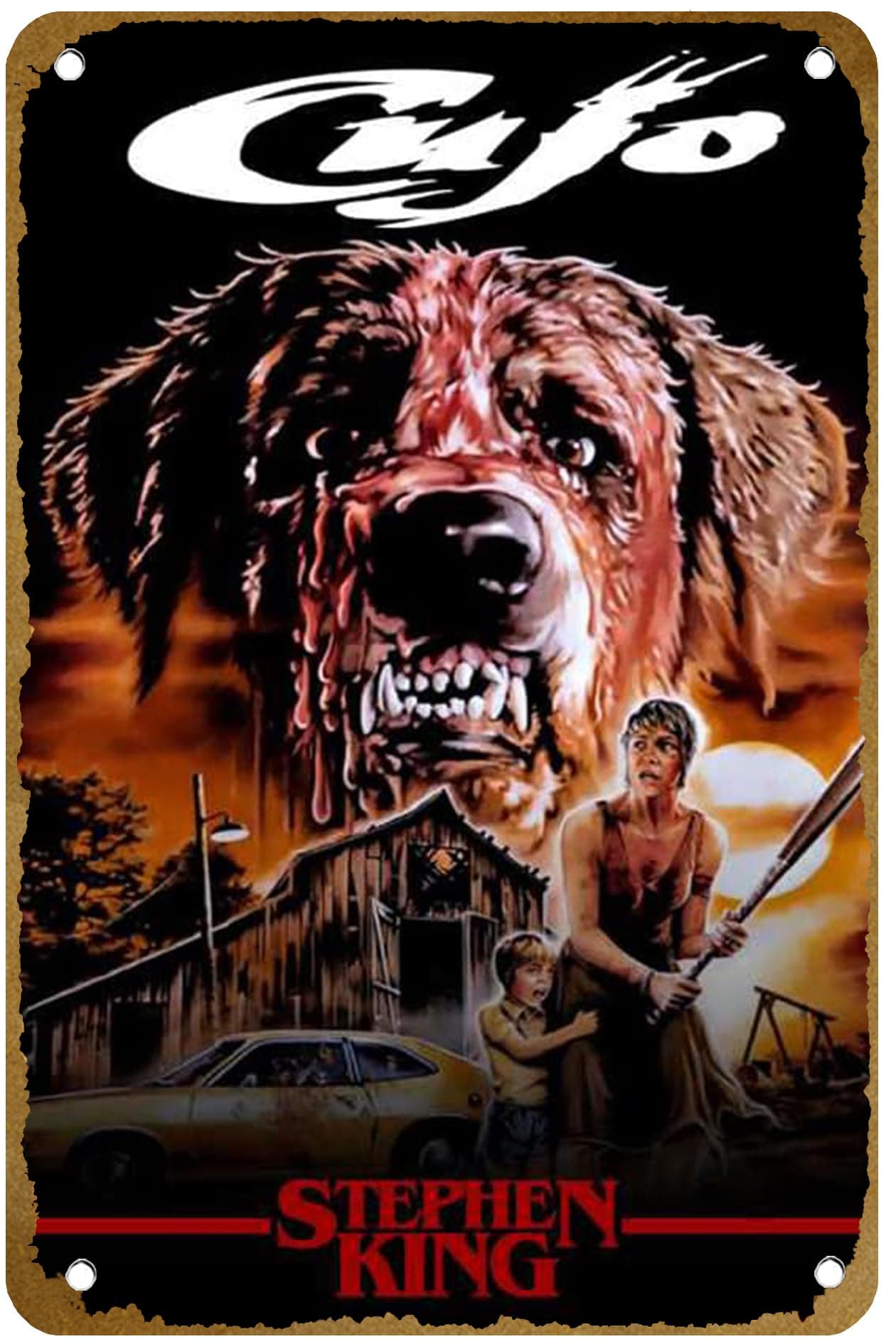
Cujo is the sort of small, sharp horror that lingers because it keeps the pressure on. Forget monster-show spectacle: Lewis Teague’s 1983 adaptation traps a mother and her child in a single, escalating emergency and refuses to look away.
THE MOVIE
Donna Trenton is still the reason this movie works
People talk about the dog, of course — a St. Bernard that becomes terrifyingly ill after a rabid bat bite — but what really fixes Cujo in the memory is what that dog does to one ordinary family. The film funnels its energy into a single, brutal premise: a mother and her small son trapped inside a disabled car while something outside will not let them leave.
That setup gives Lewis Teague room to do something clear and unforgiving. The danger is immediate and the clock is merciless: heat, the failing car and dehydration all make leaving impossible. The movie is short, tight and built around those escalating pressures.
And at the centre of it is Donna Trenton. Dee Wallace’s character starts the story with more on her mind than survival — domestic strains, personal worries — and the film watches those concerns harden into single-minded protection as the situation turns from bad to savage.
THE SETUP
The idea that sets Cujo in motion
Cujo begins with an apparently mundane piece of bad luck: a healthy family dog is bitten by a rabid bat and the illness turns it into a danger. That single, plausible change of circumstance is the engine that drives everything that follows.
The film keeps returning to two parallel threads: the external crisis of the dog’s aggression and the simmering domestic tensions that precede it. We see a family already under strain, and then the animal threat barges into that fragile normality.
Teague’s script tightens danger with simple, recurring mechanics. The car’s failure, the increasing heat and dehydration are not throwaway details — they are the rules of the game. Each one nudges the trapped pair into a steadily worse predicament.
Because the premise is compact and physically specific, the suspense feels inevitable rather than manufactured. The movie doesn’t need to invent new horrors: it just keeps turning the screws on the situation it set up at the start.
THE CHARACTER
Why Donna Trenton matters
Donna Trenton isn’t a put-upon horror protagonist or a blank-slate scream queen. She arrives with real domestic worries — marriage trouble and a complicated personal history — and the film lets those human concerns be visible before the emergency strips them away.
What makes her memorable is the way her priorities reconfigure under pressure. The movie charts a recognisable transformation: private stress becomes a fierce, pragmatic focus on keeping her child alive. That shift gives the story a clean centre-of-gravity.
Donna’s role is also what keeps the stakes human. This isn’t a broad creature feature where a town fights back: we stay with one woman, and because of that we feel how limited options, time and bodily weakness make the situation terrifying.
Contemporary reaction singled out the central performance as a major reason the character holds together on screen, which helps explain why viewers still return to Donna rather than only to the dog.
THE PERFORMANCE
Why Dee Wallace's performance matters
Across contemporary reviews and later reassessments, critics repeatedly pointed to Dee Wallace’s work as the thing that keeps the film taut. Whatever else the movie does or struggles with, observers tend to agree that Wallace gives the role the urgency it requires.
That attention matters because Cujo’s structure relies on a credible emotional anchor. When the danger narrows to two people in a car, the audience needs to believe in the protagonist’s resourcefulness and fear — and critical consensus has often named Wallace’s contribution in exactly those terms.
Discussing a single performance isn’t about celebrity name-checking; it’s about emotional geometry. The film’s dramatic choices insist that Donna feels real and urgent, and contemporary commentary repeatedly singled that out.
So whether you’re watching for chills or for character, Wallace’s presence is the reason the film keeps its grip when the premise could have become merely exploitative.
UNDER THE SURFACE
Cujo has more on its mind than the plot suggests
On the surface, Cujo is a narrow survival story. Underneath, it’s about what happens when the ordinary scaffolding of family life collapses and leaves people to fend for themselves.
At its heart is the parent–child relationship: the presence of a dependent child makes every decision sharper, every risk more wrenching. The film uses that bond to transform fear into stubborn insistence.
There’s also a strong sense of isolation. Institutional help is slow to arrive, small‑town vulnerabilities are exposed, and the characters’ confinement makes the world beyond the car feel distant and indifferent.
Finally, the movie taps a simple but effective horror idea: nature as threat. Disease turns an ordinarily familiar animal into something deadly, and that plausibility — an ordinary thing going wrong — keeps the panic close to home.
PRACTICAL EFFECTS
The effects work that gives Cujo its physical personality
Cujo’s menace is mostly practical and tactile: the titular dog wasn’t a single animal or a trick of shadows but a composite built from multiple real St. Bernards and mechanical stand‑ins.
Where the story needed closer human interaction, the production used a stunt performer in a large dog costume and a non‑St. Bernard animal dressed to look the part. Those choices let actors physically engage with the threat rather than mime terror at a stand‑in.
A professional animal trainer supervised the action, and the American Humane Association monitored the shoots, which helped the team combine real behaviour with controlled stunt work.
All of this adds up to a film that feels physically immediate. The danger isn’t suggested; it’s present in fur, breath and teeth — and the practical approach keeps the panic feeling direct.
PURE 80S
Cujo could not belong to any other decade
Released in 1983, Cujo sits squarely in an early-80s cluster of films adapting Stephen King’s novels. That wave favoured grounded, domestic nightmares over cosmic oddities, and this movie embodies that approach.
The premise — an everyday animal made deadly by disease — fits a broader trend in mainstream horror at the time: plausibility and the invasion of familiar spaces felt scarier than outright supernatural spectacle.
Cujo’s casting also links it to the era. Its lead, Dee Wallace, appeared in other major early-80s projects, which helped the film land in the same public conversation as family-tinged genre films of the period.
Put simply: the movie speaks the decade’s language. It’s a close-to-home terror story that prefers pressure and plausibility to pyrotechnics, and that sensibility is very much of its time.
WATCHING IT NOW
What has aged — and what hasn't
The fact that Cujo has been reissued repeatedly and received a 4K Ultra HD release in 2023 tells you two things: there’s continued interest in preserving the film, and enough viewers still want to see it in the best available presentation.
The central parent–child relationship still reads as the film’s strongest asset; that human core doesn’t erode with time. A believable bond between adult and child keeps the suspense focused and makes the stakes immediate for a modern viewer.
Some elements feel rooted in their era — the movie is a product of early-80s King adaptations — but the tight setup and the contained nature of the crisis mean the essentials of the experience are still effective.
If you’re watching now, Cujo plays like a compact, relentless survival piece whose emotional logic remains intact even as the years pass.
THE LEGACY
Why Cujo still matters
Stephen King himself has spoken positively about the film in interviews, which is a useful endorsement when the source author’s opinions matter to a story’s afterlife.
Beyond authorial approval, the film’s steady presence on home media — anniversary editions and the 4K release in October 2023 — shows there’s an archival and audience interest that keeps Cujo available for new viewers.
The story’s compact terror, its focus on a mother protecting her child, and the insistently physical depiction of the threat all combine to make it a reference point for grounded, domestic horror rather than a showcase for spectacle.
That combination explains why the film continues to be mentioned and why producers have considered new adaptations: it’s a small, transportable nightmare that still has mileage.
THE VERDICT
Does Cujo still hold up?
Yes — but with a clear rider. Cujo is not a widescreen blockbuster; it’s a 94-minute pressure cooker. If you come for lean, sustained tension and a human centre that never lets the premise float into the abstract, you’ll find it effective.
The film’s core conceit is stubbornly simple: a once-ordinary dog becomes a relentless threat, and a mother must protect her child while trapped in a failing car. Heat, dehydration and mechanical failure are not background details; they are the story’s ticking rules, and the movie respects them.
Dee Wallace’s Donna is the reason that respect pays off. Contemporary commentary repeatedly singled out her work as central to the film’s impact, and the mother–child dynamic (with Tad as the vulnerable dependent) is what converts fear into something the audience cares about.
So watch Cujo if you want a compact, character‑centred horror that aims for claustrophobic realism rather than grand set pieces. It’s a tight little nightmare, and Donna keeps it honest to the end.
Share this movie
Keep watching
More movies from the 80s
1986
Jumpin' Jack Flash
Jumpin' Jack Flash: our relationship with technology and freedom, and why this 1986 movie still matters.
Read our take →
1987
RoboCop
A murdered cop rebuilt as a product — RoboCop still asks who gets to sell justice.
Read our take →
1983
Christine
Obsession, adolescence and a car that won't let go.
Read our take →