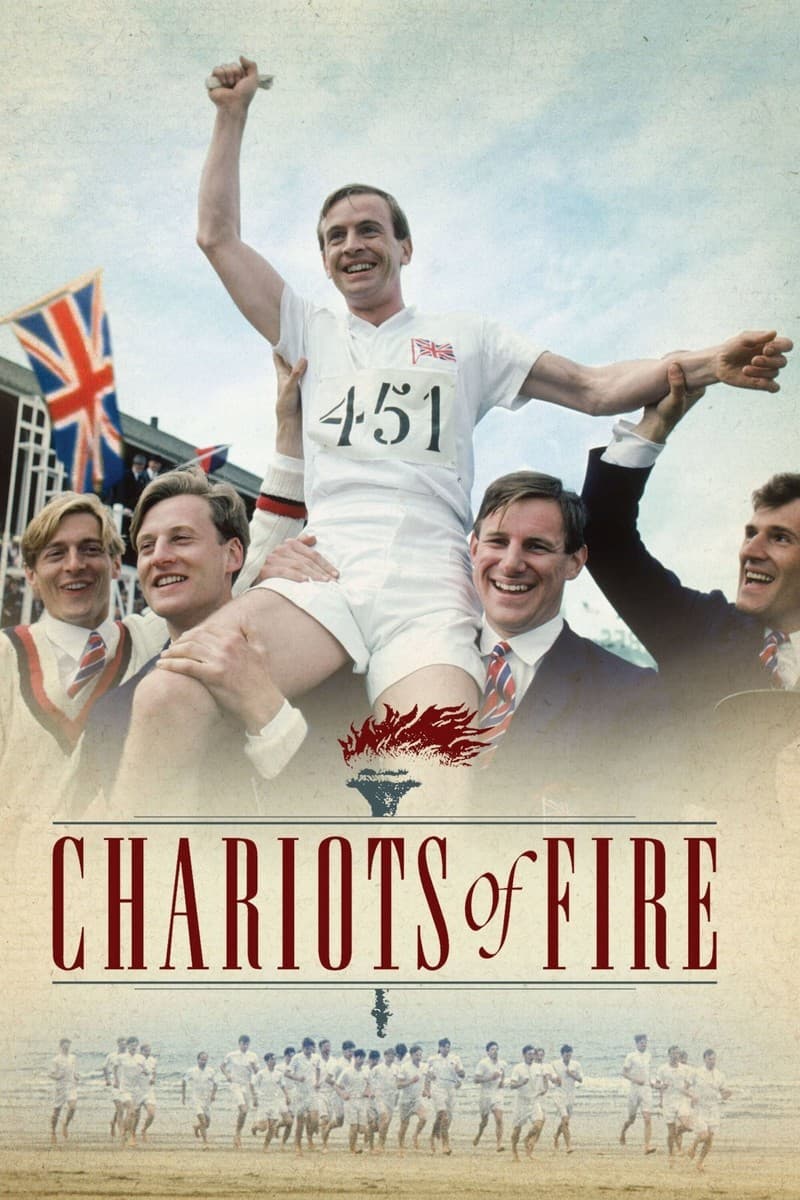
The setup
Chariots of Fire is not simply a film about races; it’s a film about the reasons people race. Hugh Hudson stages two very different motives — one driven by hurt and the need to prove oneself, the other by religious conviction — and watches them run toward the same finish line. It still asks a tidy question: what are you trying to win, and at what cost?
THE MOVIE
Harold Abrahams is still the reason this movie works
There’s a clear engine at the heart of Chariots of Fire: two young men running in the same race for very different reasons. The film sets Harold Abrahams and Eric Liddell side by side so their motives can bounce off one another and, crucially, be compared.
Abrahams’ story is the one that keeps your attention — a Cambridge student who treats the track like a proving ground, not just for speed but for dignity. He runs to fight antisemitism and to show that personal merit can outpace prejudice; the chase is personal as much as it’s athletic.
All of this is handled by Hugh Hudson, then making his leap from advertising into features, and framed with a production that favours economy and focus rather than over-explanation. It’s a 124-minute drama that makes time feel like an opponent you have to outpace.
THE SETUP
The idea that sets Chariots of Fire in motion
At its simplest, the film follows two British athletes as they prepare for the 1924 Paris Olympics. That parallel structure is the movie’s organising idea: training, heats, moral dilemmas and the final races are intercut to show how different lives approach the same test.
Eric Liddell’s plotline provides the story’s moral pinch. He is presented as a devout Christian whose refusal to run on the Sabbath creates a genuine crisis in the lead-up to the Games — a conflict that forces choices beyond form and fitness.
Behind the scenes, producer David Puttnam unearthed these incidents in the history of the Olympics and asked Colin Welland to turn them into a screenplay. That research-first approach keeps the drama tethered to real incidents rather than invention.
And the film was a first feature for a director who arrived from the world of commercials. That background helps explain some of the picture’s confident, sharply organised visual choices.
THE CHARACTER
Why Harold Abrahams matters
Harold Abrahams is the movie’s fuel. He’s not just fast; he’s furious — in the sense that every race is an answer to a life crowded with doubt and exclusion.
The film frames Abrahams as a Cambridge student whose running has a purpose beyond sport: it’s a way to beat back antisemitism and to prove his worth on unmistakable terms. That gives him a focus that can feel terminally single-minded, and dramatic as hell.
His choice to hire a professional coach is also revealing. It marks him out as someone who treats athletics as a discipline and a profession, not simply a pastime, and it creates friction with the era’s amateur ideals.
Put simply: Abrahams matters because his motives are readable and combustible, and because the film trusts us to watch what ambition does to a person when it’s fed by grievance.
UNDER THE SURFACE
Chariots of Fire has more on its mind than the plot suggests
The neat trick of the screenplay is to keep the races as spectacle while letting the quieter tensions carry the real weight. At centre is conscience versus ambition: Liddell’s religious scruple versus Abrahams’ drive to prove himself.
Closely tied to that is outsider identity and prejudice. Abrahams’ Jewishness is not a footnote; it shapes how he moves through institutions that assume he doesn’t belong, and it gives his victories an added, complicated resonance.
Then there’s honour and national representation. The film repeatedly turns personal triumph into a question about who carries a country’s image — and who gets credit for it.
Finally, sacrifice and faith are threaded through the narrative. Whether a runner sacrifices comfort, reputation or convenience, Chariots of Fire treats those choices as the metrics by which character is measured.
THE FILMMAKING
How Chariots of Fire was put together
Hugh Hudson’s move from advertising into features left a visible mark. The film often feels like a carefully staged commercial — composed, economical, and unusually disciplined for a period drama.
That polished commercial aesthetic isn’t empty showmanship; it helps the storytelling by keeping sequences lean and readable. There’s no flabby indulgence here — every sequence serves the drama of the runners and their choices.
The production credited David Watkin as cinematographer and Terry Rawlings as editor, names that signal a commitment to craft in both image and pace. Those collaborators made sure scenes flowed with clarity and purpose.
What you get is a film that looks and moves with intent: it knows when to slow down and when to let the racing do the speaking.
PURE 80S
Chariots of Fire could not belong to any other decade
One of the film’s most 1980s choices is auditory: Vangelis supplied a modern, electronic score for a 1920s story. That deliberate anachronism smells of its era — a time when synth sounds were being used to lend contemporary gravitas to period pieces.
Its arrival in 1981 also matters because the early 80s were a brief moment when British cinema found international attention with prestige, historical films. Chariots of Fire sits squarely in that wave.
Hudson’s own career path — advertising into features — was a pattern of the period. Filmmakers with commercial backgrounds were entering cinema and bringing a certain visual discipline that this film displays.
And of course it premiered as a Royal Film Performance in 1981, which underlines how the film was asked to speak for British filmmaking at that particular moment.
THE LEGACY
Why Chariots of Fire still matters
Awards help a film stay in conversation, and Chariots of Fire picked up major honours — including Academy recognition — that tethered it to a wider public memory.
Vangelis’s main theme has taken on a life of its own. The music crops up in sporting montages and publicity contexts, and those echoes mean the film’s sound has outlived many other elements of its era.
The opening scene, too — runners on a beach — has become shorthand. It’s a visual cue that people recognise and that even the town where it was shot has come to trade on.
Between score and image, there are a few simple, repeatable things from the film that have slipped into popular shorthand — which is another way of saying the movie’s fingerprints are still visible in culture.
THE VERDICT
Does Chariots of Fire still hold up?
Yes — provided you know what you’re coming for. This is a film about motives as much as metres: it deliberately cross-cuts Abrahams and Liddell to compare ambition, faith and national honour, and that structural choice still reads cleanly.
Harold Abrahams’ storyline — driven by a desire to beat prejudice and prove himself — gives the film its dramatic urgency, while Liddell’s refusal to run on the Sabbath supplies a moral counterweight. Together they make the film feel like a debate that happens to be athletic.
The presence of characters such as the pragmatic coach Sam Mussabini underlines the film’s attention to how people achieve results — strategy and technique as much as pure will. And the modern sounds of Vangelis mean the film wears a slightly 1980s hat, for better or worse.
If you want passion married to clarity, and you’re curious about how sport, belief and identity collide, Chariots of Fire still rewards a viewing. It runs on convictions — and that’s also why it keeps staying in people’s minds.
Share this movie
Keep watching
More movies from the 80s
1986
Jumpin' Jack Flash
Jumpin' Jack Flash: our relationship with technology and freedom, and why this 1986 movie still matters.
Read our take →
1987
RoboCop
A murdered cop rebuilt as a product — RoboCop still asks who gets to sell justice.
Read our take →
1983
Christine
Obsession, adolescence and a car that won't let go.
Read our take →