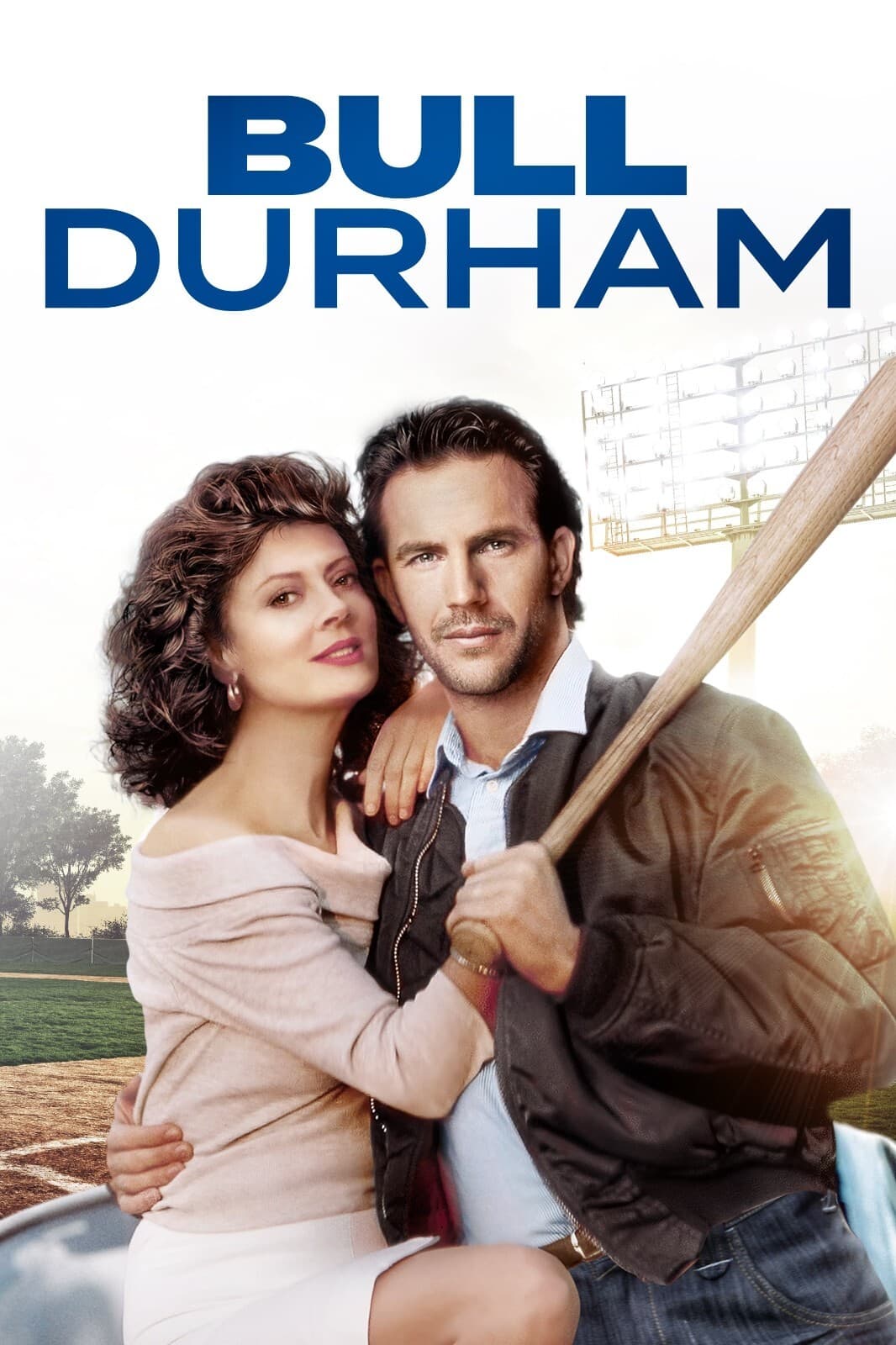
The setup
Bull Durham wedges itself into the headspace of anyone who understands sport as more than a scoreboard. At its centre is Crash Davis — a veteran catcher hired to shepherd a raw, promising pitcher while an enigmatic Annie Savoy plays her seasonal confidante. Ron Shelton’s 1988 film frames baseball as a kind of apprenticeship, and that single idea is what keeps the movie interesting long after the pop-up flies out of the infield.
THE MOVIE
Crash Davis is still the reason this movie works
You can describe Bull Durham as a romantic comedy about a minor-league team and leave it at that, but you’d miss the thing that makes people keep coming back: the professional relationship at its heart. Kevin Costner’s Crash Davis is hired by the Durham Bulls specifically to mentor an unpolished talent, Ebby Calvin 'Nuke' LaLoosh, and that mentorship is the film’s engine.
Against this practical arrangement sits Annie Savoy, the team’s self-styled devotee who annually takes one player under her wing and chooses Nuke for that season. That triangle — coach, pupil, and the woman who inhabits both their lives for a summer — lets the movie do two things at once: play the familiar beats of a romance and study apprenticeship within sport and life.
Ron Shelton wrote and directed the film, drawing on his minor-league experience to give the whole thing the shape of a season rather than a highlight reel. At about 108 minutes, it’s concise, character-forward and, because it treats baseball as ritual, deliberately interested in how men learn their trade as much as they learn to win.
THE CHARACTER
Why Crash Davis matters
Crash Davis matters because he is not merely a veteran player: he’s the professional the team brings in to teach one thing — how to be ready. That purpose gives his presence gravity. His job isn’t glamorous; it’s apprenticeship made visible.
The film presents Crash as a seasoned minor‑league catcher whose identity is tightly bound up with the experience of playing in the minors. That’s important because the stakes here aren’t superstardom but craft: the quiet passing on of knowledge that turns talent into a repeatable skill.
Framing Crash this way makes the movie less about a single summer fling and more about rites of passage. He exists so Nuke can become something else, and in doing so Crash gets to look at his own career and choices through someone who still believes raw ability will carry the day.
Putting a veteran professional at the centre also lets the film treat the baseball world as a place where mentorship is a job and a language — a setting that gives the romantic elements room to breathe without taking over.
THE PERFORMANCE
Why Susan Sarandon's performance matters
Annie Savoy could easily have been a plot device: the seasonal confidante who turns up, does her work, and leaves. Roger Ebert’s contemporary reaction singled out Susan Sarandon’s work as essential to making Annie feel like a living, complicated presence rather than a neat romantic foil.
That matters because the whole story spins around her choices. Annie is the woman who selects Nuke for the season and whose relationships with the two men structure the film’s emotional and professional arcs. If she read as hollow, the movie would collapse into a simple love-triangle exercise.
Ebert’s point gives licence to call Annie a carefully inhabited role: the screenplay writes her as influential, and the response of critics at the time suggested that the part needed someone who made those decisions feel credible on screen.
So even if you watch Bull Durham for the baseball, Annie is the character who keeps the moral and emotional questions from becoming clichés.
UNDER THE SURFACE
Bull Durham has more on its mind than the plot suggests
On the surface it’s a romantic comedy set against minor‑league baseball; under the surface it’s a film about how people teach and are taught. Mentorship and apprenticeship within sport and life are built into the premise: Crash is there to make Nuke into a professional, not just a good pitcher.
Baseball operates as ritual throughout the film — not spectacle. The games, the clubhouse routines, the roster decisions are the grammar by which the characters measure maturity, confidence and belonging. In that light the film becomes less about wins and losses than about rites of passage.
The movie also stages a conversation about talent versus craft. Nuke represents raw ability; the world Crash inhabits values the craft that makes ability reliable. Watching that tension play out gives the romance and the comedy something sturdier to lean on.
And because the story treats masculine identity through these rituals — the mentorships, the initiation into professional life — Bull Durham turns a summer at the ballpark into a course in how men are allowed to be vulnerable, confident and fallible at once.
PURE 80S
Bull Durham could not belong to any other decade
Bull Durham arrived in 1988 as Ron Shelton’s feature directorial debut and it landed neatly at the intersection of late‑80s romantic comedy and sports-film trends. That timing mattered: the movie felt like a grown‑up comedy for people who liked their laughs salted with real-life texture.
The film also did something practical for the era’s movie landscape — it helped consolidate the screen profiles of its leads. By the end of the decade Costner, Sarandon and Robbins were all seen differently, and Bull Durham played a part in that shift.
Finally, it sits alongside other late‑80s baseball pictures in a way that’s hard to ignore. Audiences then were being offered a small cluster of baseball films that mixed humour and the nuts‑and‑bolts of sports life; Bull Durham belongs to that conversation because it turned the minor leagues into a setting worth paying attention to.
WATCHING IT NOW
What has aged — and what hasn't
If you’re wondering whether the film still holds up, the evidence most retrospectives point to is the screenplay and the character work. That’s also why the film has been anthologized in critics’ lists and received a director-supervised 4K restoration and a Criterion release: people keep returning to the writing and the way the characters inhabit the minor‑league world.
The movie’s evocation of minor‑league baseball — the rituals, the decisions, the sense of community that comes with a small team — is the texture that helps it age better than many broad comedies. It doesn’t rely on a gag every minute; it trusts situations and relationships.
At roughly 108 minutes, it’s economical. The film feels paced like a season, which makes it easy to rewatch without feeling padded.
In short: the things most likely to feel quaint are peripheral. The things that matter — character-driven scenes, the mentor‑pupil stakes, the screenplay — are what critics and restorations have highlighted as reasons the film endures.
THE LEGACY
Why Bull Durham still matters
Part of Bull Durham’s afterlife is the recognition the script received: Ron Shelton earned an Academy Award nomination for Best Original Screenplay and won the Writers Guild award. That’s a tidy way of saying the industry noticed the quality of the writing at the time.
Beyond awards, the film has been regularly revisited by critics and preserved carefully — a director‑approved 4K restoration and a Criterion release underline that people see the movie as worth keeping in circulation. Those are not empty honours; they reflect continued attention to the screenplay and character work.
There are also smaller, affectionate legacies: Tim Robbins donating his Durham Bulls uniform to the Baseball Hall of Fame and anniversary screenings attended by the principal cast and filmmaker speak to an ongoing connection between the film and the real places it represented.
Taken together, these facts explain why Bull Durham remains part of conversations about baseball on screen: it was written by someone who knew the minor leagues, it treated its characters with specificity, and it has been stewarded into modern formats so newer audiences can find it.
THE VERDICT
Does Bull Durham still hold up?
Yes. If you care about character work and the mechanics of mentorship, Bull Durham still plays. The film structures a love triangle around Annie, Nuke and Crash that runs alongside Nuke’s development as a pitcher and Crash’s own reckonings about his career, and those parallel tracks keep the emotional stakes honest without resorting to melodrama.
Baseball-as-ritual is not window‑dressing here; games, clubhouse routines and roster choices are the language the characters use to measure growth. That focus on craft over spectacle — making mentorship the plot’s operating currency — is why the central relationship earns our attention.
Critics at the time highlighted elements that remain persuasive today: the screenplay’s clarity and the way the principal parts were presented as breakthrough roles for Costner, Sarandon and Robbins. Roger Ebert singled out Susan Sarandon’s contribution as essential to Annie’s believability, which matters because Annie’s choices are what drive much of the film’s moral and romantic friction.
So watch it for Crash Davis and what he teaches, for the way a summer in the minors is framed as a rite of passage, and for a screenplay that still holds up — which is why the film has been restored and collected for modern viewers. It’s a reminder that you don’t need a stadium full of extras to tell a big story about becoming a professional... and becoming yourself.
Share this movie
Keep watching
More movies from the 80s
1986
Jumpin' Jack Flash
Jumpin' Jack Flash: our relationship with technology and freedom, and why this 1986 movie still matters.
Read our take →
1987
RoboCop
A murdered cop rebuilt as a product — RoboCop still asks who gets to sell justice.
Read our take →
1983
Christine
Obsession, adolescence and a car that won't let go.
Read our take →