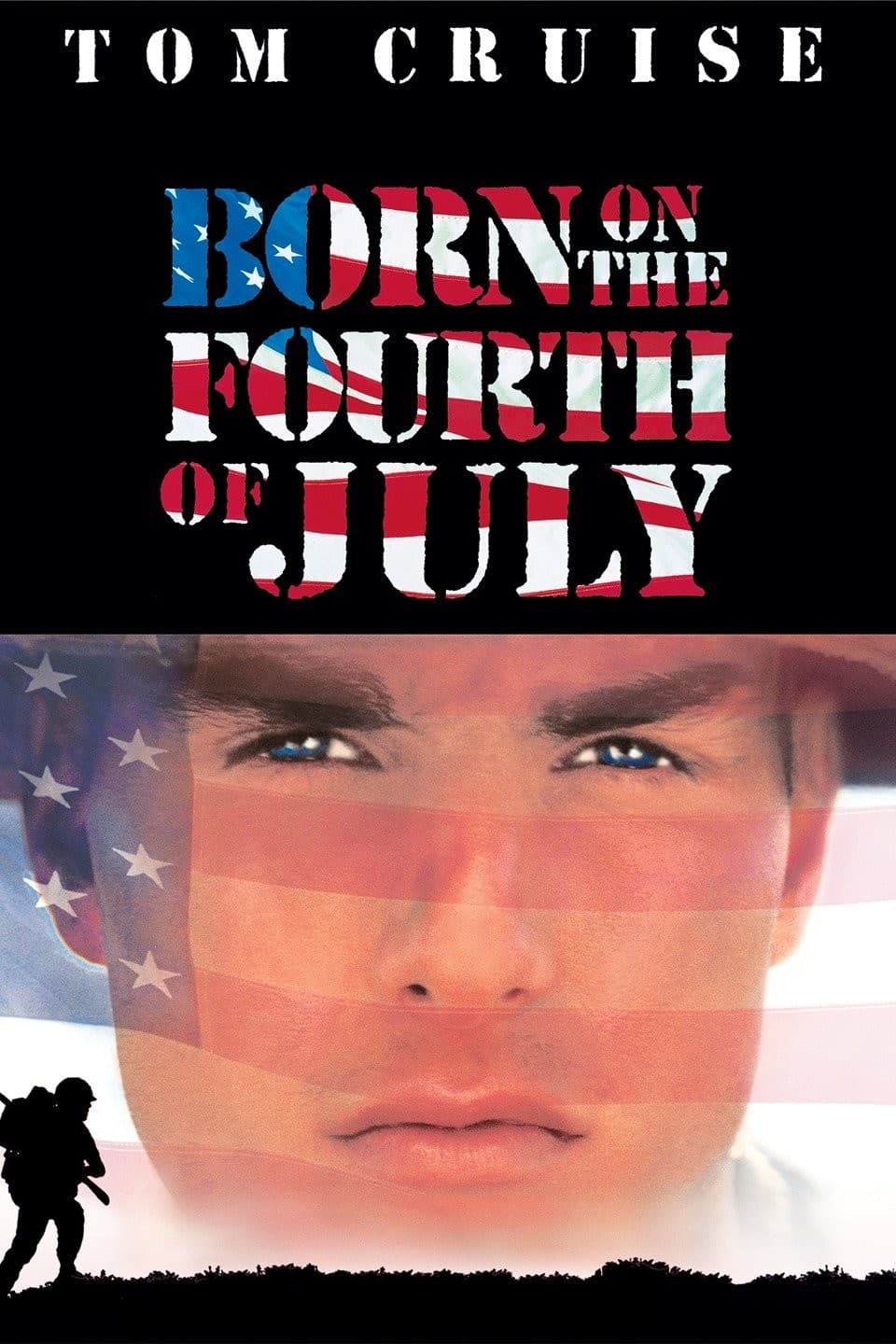
Born on the Fourth of July
A patriot’s faith, broken and rebuilt — Ron Kovic keeps the film honest.
The setup
Oliver Stone’s Born on the Fourth of July is a movie that trusts its central figure. It’s a two‑decade journey from small‑town idealism to a very public, often painful political conversion — and the fact that the real Ron Kovic helped write the screenplay gives the film a rare, blunt authenticity. Watch it now and you notice quickly why people still talk about it: it refuses easy answers.
THE MOVIE
Ron Kovic is still the reason this movie works
Born on the Fourth of July is not a tidy biopic. It adapts Ron Kovic’s memoir and follows a very particular arc: a Long Island sportsman turned Marine whose wartime injury and hospitalisation push him into public protest. The book’s bluntness survives the screen version because Kovic helped shape the screenplay alongside Oliver Stone.
That collaboration matters. The film is anchored on one man’s experience — Tom Cruise plays Ron Kovic — and the narrative stakes are literal: idealism drives him to enlist, a battlefield wound changes his body, and the hospital becomes the place where his politics are born. It’s a tight, personal throughline that keeps the bigger historical claims grounded.
Stone’s direction and the film’s themes — the gulf between patriotic myth and wartime reality, the treatment of veterans, the physical and moral toll of combat and the turn to protest — give the picture a clear purpose. It runs for the long haul (144 minutes) and never pretends the answers are simple.
THE SETUP
The idea that sets Born on the Fourth of July in motion
The film’s engine is straightforward and effective: watch a patriotic kid from Massapequa sign up, go to Vietnam, return in a different body and mind, and then make the public choice to protest. That sequence — youth, combat, hospital, activism — gives the screenplay an almost sectional clarity without feeling schematic.
Because the screenplay was co‑written by Ron Kovic and Oliver Stone, the film stays close to the personal facts of that trajectory. It’s less interested in the grand sweep of history than in the way those historical forces batter one life into a new shape.
That intimacy is why the setup works: the audience isn’t asked to decode politics from a distance but to watch how events reroute a single character’s life and loyalties. The change feels earned rather than summed up in a speech.
The picture was made on what contemporary reporting lists as a roughly $17–18 million production budget, which is worth remembering: Stone staged large crowds and extended sequences without turning the film into an effects spectacle. The story remains the point.
THE CHARACTER
Why Ron Kovic matters
Ron Kovic matters because the film makes him specific. He isn’t introduced as an emblem but as an all‑American athlete whose sincere idealism sends him to the Marines — and that sincerity is the engine for everything that follows.
Crucially, the wound he receives in combat and what happens during his hospitalisation are presented as the turning points that alter his beliefs. The movie treats these moments not as convenient plot devices but as the lived experience that forces a political conversion.
Kovic’s ties to family and the medical system are threaded through the story to dramatise another idea the film won’t let you ignore: institutional neglect. His relationships — with relatives and with staff — give human shape to the bureaucratic and personal costs of injury.
Finally, the fact that the film adapts Kovic’s own memoir and that he collaborated on the screenplay helps the character avoid caricature. You get the sense this is an attempt to put one real, messy life on screen, not to polish it into a tidy message.
THE PERFORMANCE
Why Tom Cruise's performance matters
Contemporary reviewers singled out Tom Cruise’s portrayal of Ron Kovic and it changed how people thought about the actor at the time.
The role earned Cruise his first Academy Award nomination, which is a factual marker that the industry and critics regarded the performance as central to the film’s impact.
That recognition matters because the movie rests on the audience staying with one man through difficult transitions — and the attention paid to Cruise’s turn shows that his work was viewed as carrying that burden.
Even phrasing it plainly: the film needed an actor who could plausibly be an eager recruit, an injured veteran and a public activist across decades, and contemporary response made clear Cruise’s portrayal persuaded a lot of viewers.
UNDER THE SURFACE
Born on the Fourth of July has more on its mind than the plot suggests
On the surface it’s a life story. Underneath, Stone keeps returning to one hinge: patriotism versus disillusionment. The film shows how a deeply held national faith can be tested and then transformed by traumatic experience.
Closely related is the film’s attention to veteran care and institutional neglect. The hospital and homecoming scenes aren’t padding — they’re the place where systems and relationships reveal their failures.
The physical cost of war is obvious: the movie doesn’t shy away from the bodily consequences of combat. But it pairs that with the moral cost — what a person loses and must rebuild when their certainties collapse.
And finally, political activism and protest are shown as a response, not as an accessory. The move from private suffering to public protest is made credible because the film keeps the personal reasons visible.
THE FILMMAKING
How Born on the Fourth of July was put together
The film’s shape owes a lot to its post‑production. Editors David Brenner and Joe Hutshing significantly reworked the picture in the cut — and their work was recognised with an Academy Award for Best Film Editing. That tells you the editing isn’t decorative; it’s structural.
Robert Richardson shot the picture in anamorphic widescreen using Panavision equipment, which gives the film a widescreen frame that handles both intimate interiors and large public sequences. The choice of format is part of the film’s identity.
Oliver Stone’s direction also received top recognition: he won the Academy Award for Best Director for this film. That’s a concrete indicator of how the filmmaking was read at the time — as an ambitious, director‑led project.
Put together, those production choices — the widescreen photography, the disciplined reworking in the edit and a director with a clear agenda — create a film that moves assertively between private moments and large public set pieces.
PRACTICAL EFFECTS
The effects work that gives Born on the Fourth of July its physical personality
Stone and the production mixed newly shot material with archival news footage and deliberately used different film stocks to create distinct visual textures. That technique lets sequences feel like contemporary reportage at times and like staged drama at others.
The production also brought in former Marine Dale Dye to train and lead the actors during military training sequences and to serve as a consultant on authenticity. His involvement is a sign the film aimed for a believable military presence.
Large‑scale crowd staging was another practical component: parade, convention and protest scenes were mounted with thousands of extras, and the film even mounted a re‑shoot of a convention/protest sequence with several thousand extras at the studio’s request.
Those choices — mixed film stocks, veteran consultation and real crowds — give the film a textured, tactile quality that keeps the audience immersed in both private and public moments.
PURE 80S
Born on the Fourth of July could not belong to any other decade
Produced and released in the late 1980s, Born on the Fourth of July sits squarely in a moment when American cinema was revisiting Vietnam and the problems veterans faced. The film’s timing matters: it’s part of a late‑decade conversation, not a standalone outburst.
It’s also the central film in Oliver Stone’s informal Vietnam War trilogy — a sequence that begins with Platoon (1986) and continues with Heaven & Earth (1993). That placement gives the film a specific career and historical context.
That trilogy framing isn’t trivia; it’s why the film feels like a middle movement. Stone was developing a sustained argument across several pictures about how the war reshaped people and institutions.
In short: released in 1989, Born on the Fourth of July belongs to the late‑80s moment of reckoning with Vietnam and veterans’ experiences, so its energy and focus are the products of that particular moment in American filmmaking.
WATCHING IT NOW
What has aged — and what hasn't
Technically, the film has been revisited: restoration and collector 4K releases in the 2020s have prompted fresh commentary about the picture’s visual textures and editorial choices. Those efforts show there’s attention to how the film looks and is presented now.
Beyond the pictures and prints, the story itself holds a particular kind of durability. Watching Kovic’s arc — the youth, the wound, the hospital and the turn to protest — still reads as a coherent life journey rather than a dated political tract.
The film’s segmentation across roughly two decades gives viewers an easy way in: it’s structured so you can follow the shifts in belief and circumstance without getting lost. That structural clarity helps the movie remain watchable.
In short: modern presentations reframe how the film looks, and the fundamental life story at its centre still provides the emotional throughline that keeps the picture feeling immediate.
THE LEGACY
Why Born on the Fourth of July still matters
The film’s awards season record is part of why it remains referenced: at the 62nd Academy Awards it won Best Director for Oliver Stone and Best Film Editing for David Brenner and Joe Hutshing, and it attracted multiple other nominations.
It also did very well at the Golden Globes, winning major categories including Best Motion Picture – Drama, Best Actor for Tom Cruise, Best Director and Best Screenplay. Those achievements cemented the film’s standing at the time.
Beyond trophies, the movie is frequently returned to in surveys of Vietnam War cinema and in discussions of Oliver Stone’s career and late‑20th‑century American historical filmmaking. Scholars and critics still treat it as a substantial statement on veterans and memory.
More recently, renewed home‑video attention — including collector and 4K releases — has prompted fresh technical and archival commentary, which keeps the picture in circulation for new viewers and close reappraisals.
THE VERDICT
Does Born on the Fourth of July still hold up?
Yes — but with a rider. Born on the Fourth of July remains worth watching because it is, at its best moments, an unvarnished portrait of one man’s remaking. The screenplay was co‑written by Ron Kovic, and the film traces his passage from patriotic youth through combat, paralysis and public activism in a way that feels intentional and sustained.
Tom Cruise’s central turn — which earned him his first Academy Award nomination — is the linchpin: the movie asks you to follow a personal transformation that takes place across roughly two decades and is organised into distinct sections (youth, combat, hospital/homecoming, activism). That structure helps the film keep its focus.
The supporting ensemble (including named contributors in the cast) and the use of Kovic’s family and medical relationships to dramatise institutional neglect add real weight. These elements mean the film still speaks to questions about how societies treat the people they send to war.
If you go now, expect a film that confronts its subject directly; it’s neither tidy nor complacent. Watch it for Ron Kovic’s story — it’s the thing that makes the rest of the movie matter.
Share this movie
Keep watching
More movies from the 80s
1986
Jumpin' Jack Flash
Jumpin' Jack Flash: our relationship with technology and freedom, and why this 1986 movie still matters.
Read our take →
1987
RoboCop
A murdered cop rebuilt as a product — RoboCop still asks who gets to sell justice.
Read our take →
1983
Christine
Obsession, adolescence and a car that won't let go.
Read our take →