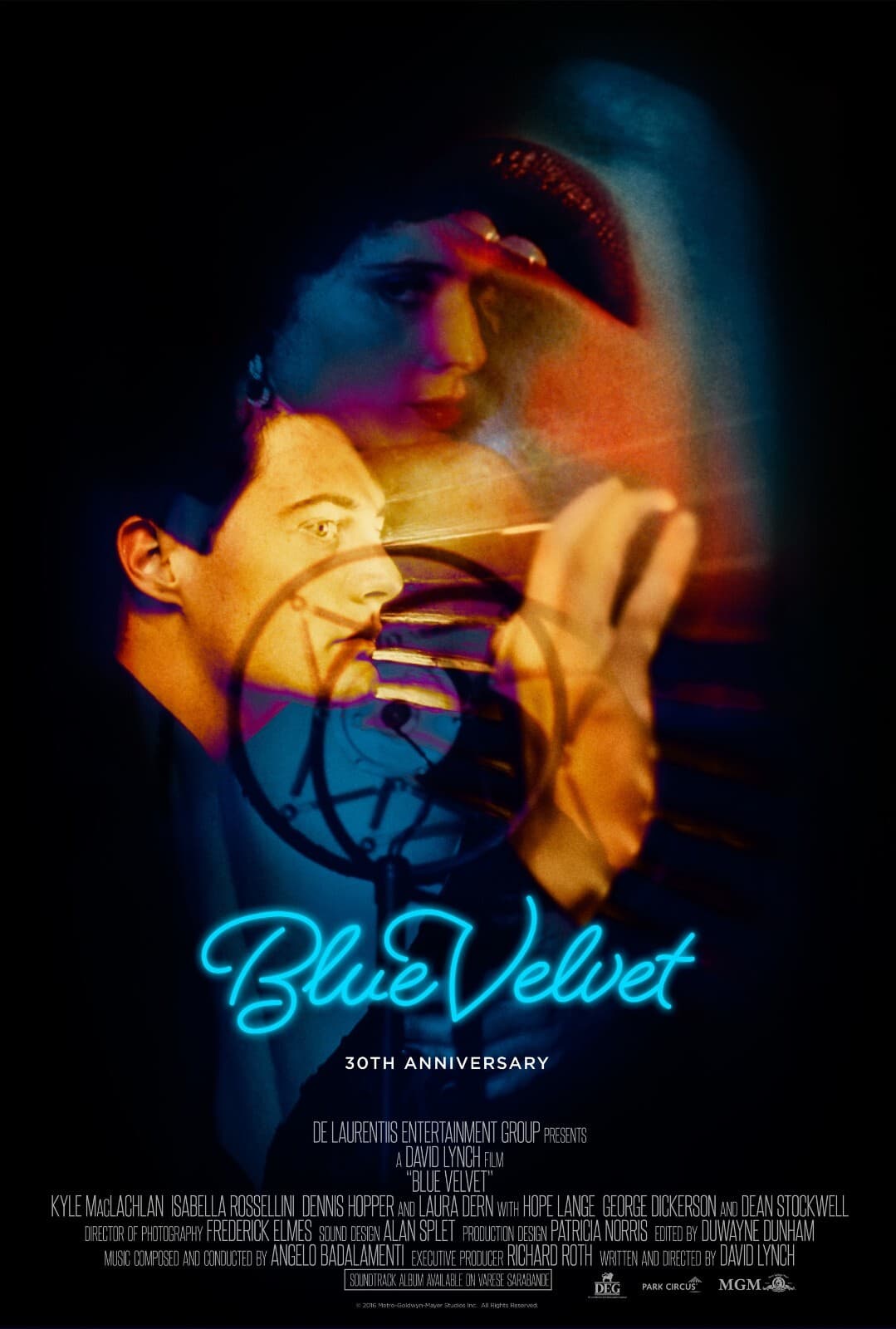
The setup
Blue Velvet still hooks you on its first strange image — a college kid who wants to be brave finds a bright, terrible clue in a field and walks toward trouble. David Lynch made a film that pairs suburban sweetness with something corrosive underneath, and Jeffrey Beaumont is the nervous compass that points the whole thing into dark territory.
THE MOVIE
Jeffrey Beaumont is still the reason this movie works
The moment Jeffrey Beaumont finds a severed ear in a field, Blue Velvet stops being a cosy small‑town drama and becomes an investigation. That single, grotesque object drags a college student out of complacency and into a hidden criminal world.
Jeffrey’s curiosity — and his desire to do something heroic — is the engine. His probe leads him from that field to Dorothy Vallens, a nightclub singer, and into the orbit of Frank Booth, whose control over Dorothy is the central and terrifying danger Jeffrey must face.
All of which is to say: yes, the film is about weird atmospheres and Lynchian unease, but it keeps working because the story lets Jeffrey’s coming‑of‑age shove the viewer through the door. David Lynch directs; Kyle MacLachlan plays Jeffrey; and the film places loss of innocence at its emotional core.
THE CHARACTER
Why Jeffrey Beaumont matters
Jeffrey isn’t a hardened detective or a noir anti‑hero. He’s a college kid who stumbles onto something he shouldn’t have and decides to poke about. That curiosity — the wish to mean something brave — is what makes him memorable.
His discovery of the ear is not just a plot gimmick: it’s the literal shove that starts his arc from sheltered student toward exposure to a violent underside. The investigation becomes personal, and his choices keep the story taut.
Because the film doesn’t turn him into an invincible problem‑solver, Jeffrey functions as a stand‑in for the viewer. We follow because he follows, and his naivety is the measure against which the town’s corruption is judged.
Contemporary reaction to the film was divided, and that split often included debate about Jeffrey’s role — whether the movie’s moral testing of a young protagonist was provocative or troubling. Either way, he’s the character who asks the questions the film wants us to sit with.
THE PERFORMANCE
Why Isabella Rossellini's performance matters
Isabella Rossellini’s Dorothy Vallens was singled out early and often in criticism, the kind of role that provoked intense conversation. That attention tells you two things: the part demands a lot, and the film doesn’t allow the character to be ignored.
Part of what anchors Dorothy on screen was a clear focus on voice. During production Angelo Badalamenti worked with Rossellini as a vocal coach — a detail that connects her on‑screen singing and presence directly to the film’s sonic world, because he later composed the score.
Mentioning the vocal coaching is not a trivia aside: it points to how the role was shaped practically, with sound and performance braided together rather than left to chance.
Critics’ responses to Rossellini (and to Dennis Hopper) remained a major talking point, which is itself a form of evidence for how central their performances are to the film’s experience.
UNDER THE SURFACE
Blue Velvet has more on its mind than the plot suggests
At surface level Blue Velvet plays like a mystery or noir: a clue, an investigation, a seedy underworld. But the film keeps folding that outward plot into ideas about a young person losing his naïveté — a very literal loss of innocence.
Voyeurism is threaded through the story. Watching and being watched operate as moral and erotic levers: the act of looking is both how Jeffrey pursues truth and how characters exercise power.
There’s also a picture of small‑town corruption, the sense that tidy domestic life can mask brutal, private misery. That contrast — the pleasant exterior and the ugly interior — is the film’s repeated pressure point.
And finally, power and sexual domination are not incidental. They are the dark forces Jeffrey encounters, and they reshape the stakes from a detective puzzle into a test of whether his youthful heroism actually means anything.
THE FILMMAKING
How Blue Velvet was put together
Names matter here. Frederick Elmes served as director of photography, Patricia Norris ran production design, and Duwayne Dunham handled the editing. That trio — images, sets and pace — is what gives the film its particular identity.
Those practical roles keep the film grounded: production design and editing choices stop the surreal notes from floating off into pure abstraction and keep the narrative pressure where it should be.
Decades later, the Criterion 4K restoration — supervised and approved by David Lynch — treats those elements as precious. The decision to revisit the film in such a careful way suggests those filmmaking choices are central to how people experience the picture now.
In short: Blue Velvet feels like a film made by technicians with strong, deliberate ideas about how images and rhythm create unease.
PRACTICAL EFFECTS
The effects work that gives Blue Velvet its physical personality
Blue Velvet opens on a shocking, tactile image: a severed ear. That prop wasn’t digital wizardry — makeup supervisor Jeff Goodwin created the ear prosthetics used on set.
The production treated the ear and even the ants placed on it as on‑set practical material; the handling of the prop is discussed in production featurettes and crew interviews.
That practical attention gives the opening scene a physical insistence. The ear is not an abstract clue; it has weight, grime and presence, and the crew made sure it behaved that way in front of the camera.
It’s a reminder that some of the film’s nerve comes from the hands that built these moments, not from post‑production trickery.
PURE 80S
Blue Velvet could not belong to any other decade
Blue Velvet arrived in 1986, at a moment when American cinema was experimenting with neo‑noir and postmodern twists on genre. It sits comfortably in that conversation as a mystery/thriller with a darker, more surreal edge.
Its production history also has an 80s flavour: financed and presented through Dino De Laurentiis’s De Laurentiis Entertainment Group, the film represents a pivot for Lynch — a move away from big studio work back toward a more personal project.
The release sparked a polarised debate in the United States about depictions of sexual violence and taste in cinema. That ferocious argument about what a mainstream film should show is very much a product of its era.
Finally, the film’s American release and location shooting in North Carolina tie it to the practical realities of 1980s filmmaking — a period of shifting studio fortunes and filmmakers testing how far mainstream audiences could be pushed.
THE LEGACY
Why Blue Velvet still matters
Blue Velvet earned David Lynch an Academy Award nomination for Best Director, and critics’ organizations recognised the film with top honours — evidence that it wasn’t merely provocative for provocation’s sake.
The picture also played a big role in reviving Dennis Hopper’s career and boosting Isabella Rossellini’s profile as a film actress; Frank Booth in particular has long been treated as a memorable cinematic villain.
The Criterion Collection’s director‑approved 4K restoration, complete with documentaries and archival material, has helped keep the film in circulation and under continued critical discussion.
Taken together, awards recognition, career impacts for its leads and the care given to preserving the film explain why it keeps turning up in retrospectives and academic conversation.
THE VERDICT
Does Blue Velvet still hold up?
Yes — with a clear rider. Blue Velvet remains a compelling, unsettling film because it foregrounds a simple dramatic mechanism: a young man finds an ear, follows a thread and is tested by a darker world. That structure still hooks an audience.
The movie’s juxtaposition of a conventional coming‑of‑age track (Sandy Williams as Jeffrey’s social anchor) against Dorothy and Frank’s brutal underside keeps the stakes moral as well as narrative. Jeffrey’s curiosity and wish to be heroic are not abstract notions; they are the film’s throughline.
Part of the reason people return to the film is its performances and the conversations they provoke — Dennis Hopper and Isabella Rossellini were repeatedly singled out, and Rossellini’s vocal work was supported on set by Angelo Badalamenti, who went on to compose the score. Those elements help the film land the emotional jolts it intends.
So should you watch it now? If you’re prepared for a deliberate, sometimes uncomfortable collision of suburban normality and sexual violence, and you want a film that pushes its viewers to look (and to be watched), Blue Velvet still delivers. It’s a movie that makes you pay attention — and stays with you because it refuses to let easy answers stand.
Share this movie
Keep watching
More movies from the 80s
1986
Jumpin' Jack Flash
Jumpin' Jack Flash: our relationship with technology and freedom, and why this 1986 movie still matters.
Read our take →
1987
RoboCop
A murdered cop rebuilt as a product — RoboCop still asks who gets to sell justice.
Read our take →
1983
Christine
Obsession, adolescence and a car that won't let go.
Read our take →