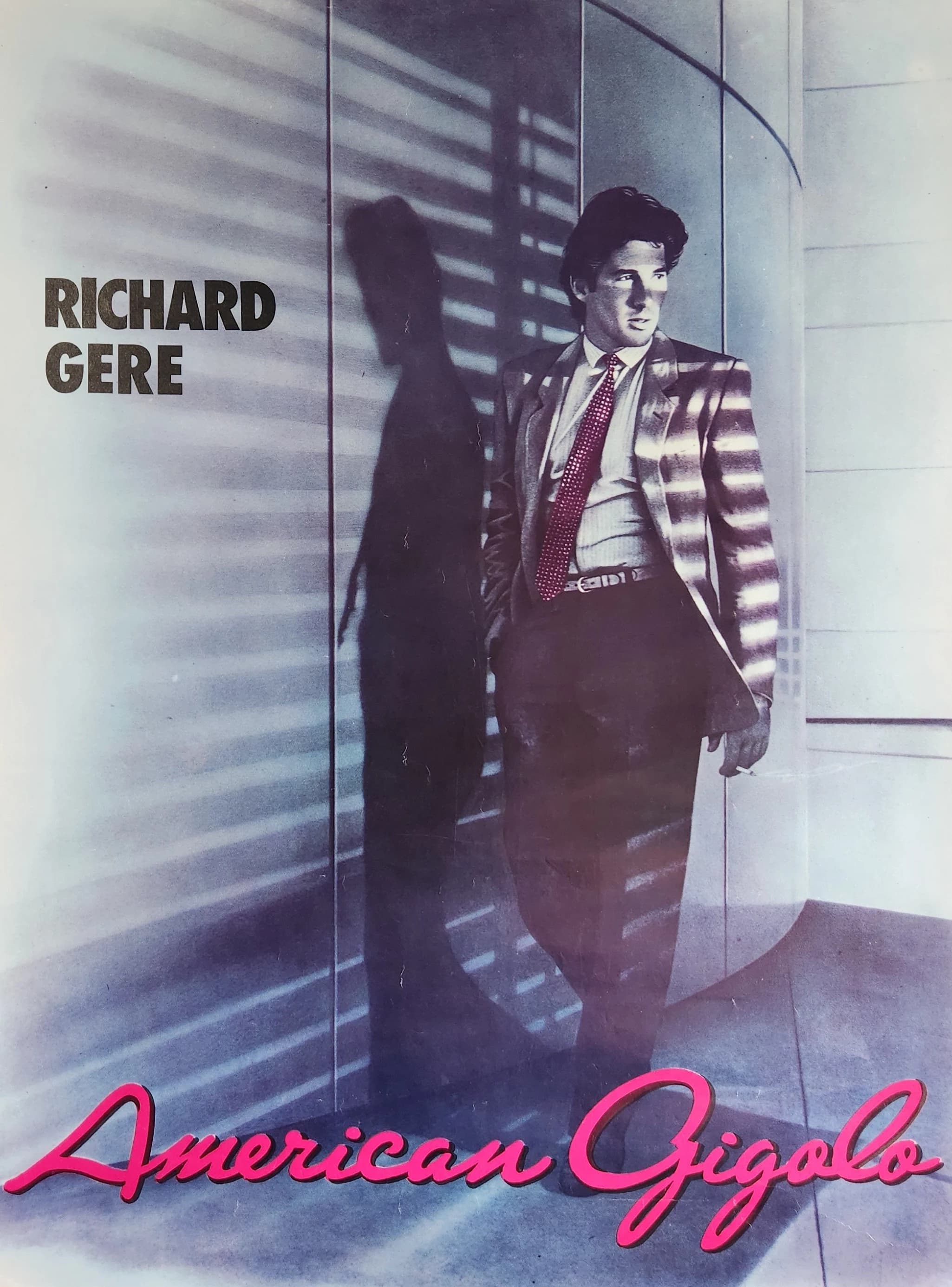
The setup
American Gigolo opens on a man who sells company for a living and then discovers nobody is buying anything that matters. Paul Schrader turns that bargain — sex for money, intimacy for surface — into a noirish mystery when Julian Kay is accused of murder. The result is less about whodunnit and more about who Julian becomes when his armour of style stops working.
THE MOVIE
Julian Kay is still the reason this movie works
Nobody remembers American Gigolo purely for plot mechanics. They remember Julian Kay — a man whose whole life is a workplace and whose workplace is built from cars, clothes and carefully managed distance.
That distance matters because the film gives him a very particular problem: after a client is murdered, Julian is suddenly the prime suspect, and what had been a lifestyle becomes evidence against him.
Paul Schrader wrote and directed the film as a study of surfaces: it’s a 117-minute drama-crime-neo-noir that dresses its questions about intimacy and identity in high-style clothes and then asks what happens when style ceases to protect you.
THE SETUP
The idea that sets American Gigolo in motion
The engine of the film is simple and slightly mean: Julian Kay, a high-priced escort in Los Angeles, finds himself prime suspect when a previous client turns up dead.
The plot complication that follows isn’t a twist so much as a mechanism — evidence is planted to tie Julian to the killing, and his attempts to clear his name push the story forward.
That framework gives Schrader room for something else: the relationship Julian develops with a politician’s wife becomes both a complication and the only genuine human connection on offer.
So the mystery keeps moving, but the movie’s interest is often less in solving the crime than in watching a life built on commerce and appearance unpick under pressure.
THE CHARACTER
Why Julian Kay matters
Julian isn’t written as an open book. He’s written as an advertisement: precisely composed, polished, economical with feeling. Richard Gere plays him, yes, but what matters on the page is that Julian’s currency is appearance and paid companionship.
That makes him a neat dramatic question. He gives intimacy for money — but he doesn’t receive it. The film makes loneliness the logical consequence of a life where everything is transactional.
Because Julian’s identity is so wrapped up in surface, the frame-up isn’t just a plot device. It’s existential: the planted evidence threatens not just his freedom but the personality he’s cultivated.
In short, Julian matters because the story turns him into a case study of what happens when fashion and commerce are mistaken for a soul.
THE PERFORMANCE
Why Richard Gere's performance matters
Contemporary reaction singled out Gere’s portrayal. Roger Ebert, for example, framed the performance as carrying a 'winning sadness' and treated Julian as a vulnerable figure rather than a mere cipher.
That reading matters for how you experience the film: Julian is not purely showroom mannequin, and the suggestion of vulnerability invites the audience to look past the costume and ask who’s left underneath.
So while the screenplay emphasises surfaces, the performance — as noticed by critics like Ebert — allows the film to register a human cost beneath the glamour.
UNDER THE SURFACE
American Gigolo has more on its mind than the plot suggests
On one level the film is a crime story; on another it’s a meditation on loneliness. Julian’s trade guarantees transactions, not attachments, and the screenplay keeps returning to that emotional debt.
It’s also a film about the commodification of intimacy — what happens when companionship is priced and packaged, and how that pricing warps the person selling it.
Appearance and identity are constant questions. Schrader’s notes call Julian a 'character of surfaces,' and the movie uses fashion and image to ask whether identity becomes genuine or merely a product to be consumed.
THE FILMMAKING
How American Gigolo was put together
Schrader approached the film as a study in surfaces and recruited collaborators to match that plan. Production design, costumes and the music were assembled to create a stylised, controlled world rather than a documentary street portrait.
John Bailey is credited as director of photography, Richard Halsey as editor and Ed Richardson as production designer — the names on the crew list that helped turn the screenplay’s surface theory into a consistent screen reality.
That deliberate construction is why the film looks and feels like a world of curated taste: the filmmaking choices rarely shout, but they organise everything around Julian’s persona so the story can quietly test it.
PURE 80S
American Gigolo could not belong to any other decade
Released in 1980, the film sits exactly where late-1970s cool meets early-1980s pop glitz. That timing matters because the movie uses contemporary fashion and nightlife culture as part of its argument about surface and value.
Its soundtrack and pop-electronic sensibility — with Giorgio Moroder composing and Blondie’s 'Call Me' as the film’s main single — tied the picture tightly to the era’s music scene and helped give it a modern pulse.
Put simply: American Gigolo doesn’t just happen to look of its time. Its high-style aesthetic and nightclub-rooted soundtrack place it squarely in the moment when appearance and celebrity began to feel like currency.
WATCHING IT NOW
What has aged — and what hasn't
The central premise — a high-priced escort framed for murder while trying to hold on to a real relationship — still reads as a compact, watchable story. The frame-up and the legal jeopardy remain narratively engaging.
What also survives is the movie’s thesis: making a character whose whole identity is commercialised remains a sharp move. The idea of Julian as a 'character of surfaces' continues to give the film a clear, discussable centre.
So while some aspects of style lock the film to its time, the structural idea — of loneliness produced by a life of transaction — still lands for modern viewers who notice how image can be an emotional substitute.
THE LEGACY
Why American Gigolo still matters
Part of the film’s afterlife is musical: 'Call Me' became a major chart hit and remains pinned to the movie in people’s minds, a pop-cultural shortcut back into that world.
The film also left a thematic footprint. Schrader himself and commentators have drawn a line from American Gigolo to later pictures of lonely, image-conscious men — the clearest example being his own The Walker.
Finally, the movie’s craft received some formal recognition at the time: two Golden Globe nominations for score and song underline that the soundtrack was not incidental but integral to the film’s identity.
THE VERDICT
Does American Gigolo still hold up?
Yes — with qualifications. The film’s set-up is still tidy and tense: Julian Kay, a high-priced escort keeping a luxury life, is framed when a client is murdered and must fight planted evidence while an illicit relationship with a politician’s wife complicates matters.
Where it succeeds is in keeping the stakes both literal and intimate. The investigation led by Detective Joe Sunday magnifies Julian’s isolation, and the movie repeatedly uses visual markers — wardrobe, grooming and car — to show how his social position unravels as the case closes in.
If you’re drawn to stories that use style as argument — where appearance, commodified intimacy and loneliness are the themes under pressure — this one still rewards. The soundtrack and the structure give it a distinct identity that reads as both period piece and character study.
If you want pure plot-first detective work, you might find it occasionally evasive. But as an exercise in how a life of surface can be exposed and dismantled, American Gigolo remains worth watching.
Share this movie
Keep watching
More movies from the 80s
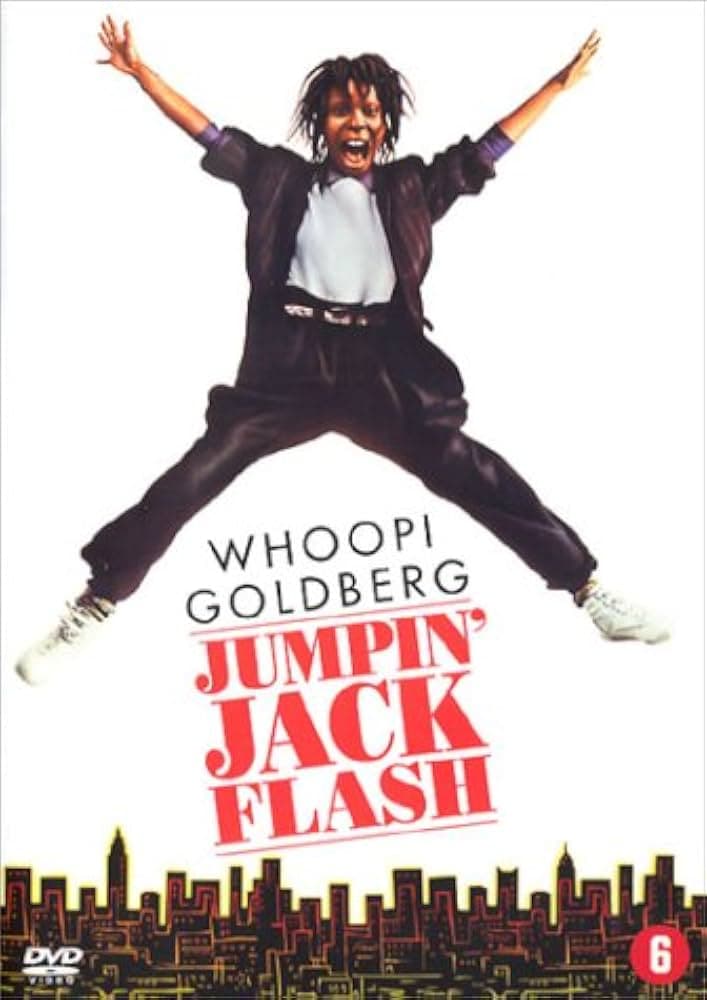
1986
Jumpin' Jack Flash
Jumpin' Jack Flash: our relationship with technology and freedom, and why this 1986 movie still matters.
Read our take →
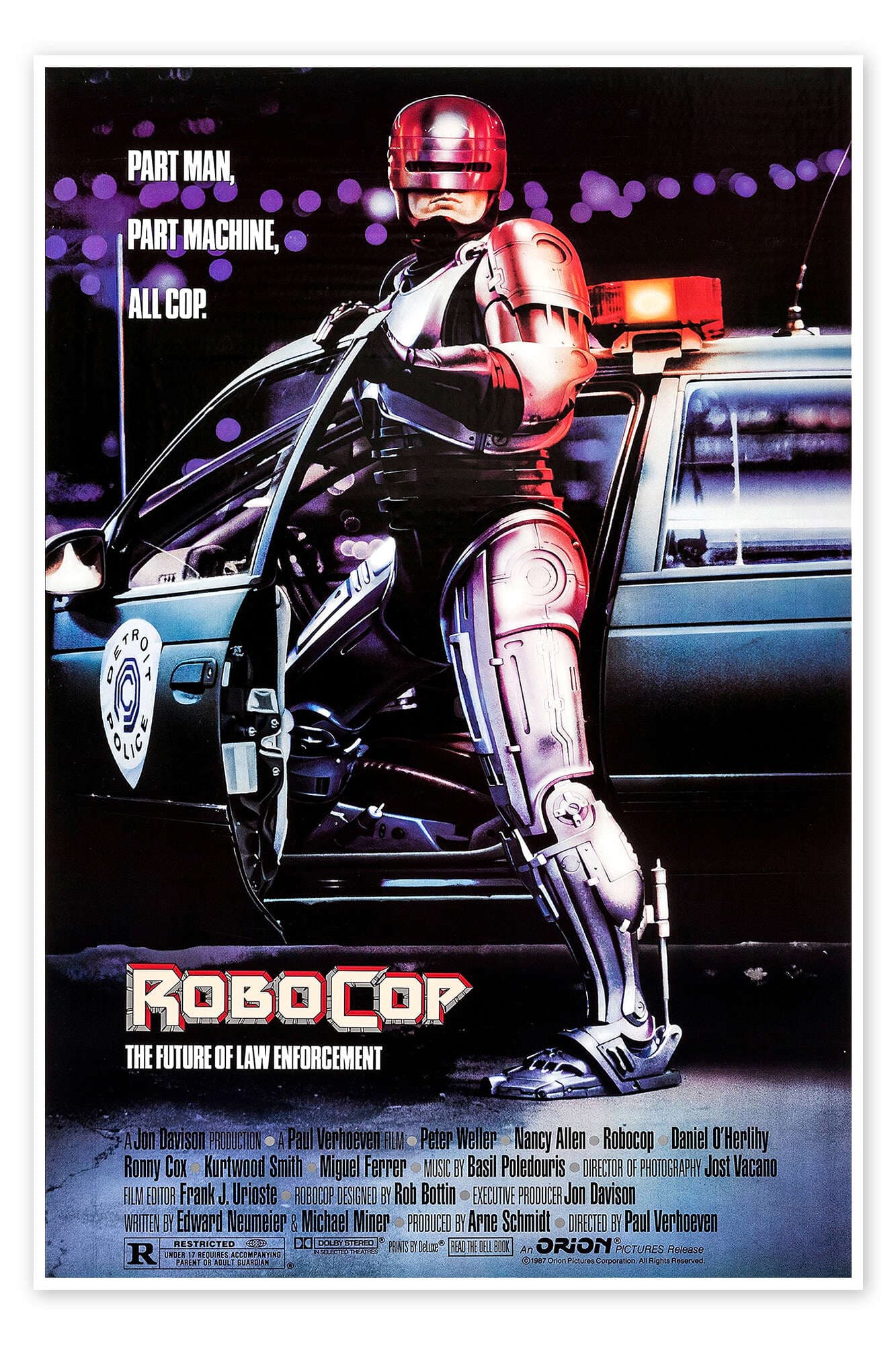
1987
RoboCop
A murdered cop rebuilt as a product — RoboCop still asks who gets to sell justice.
Read our take →
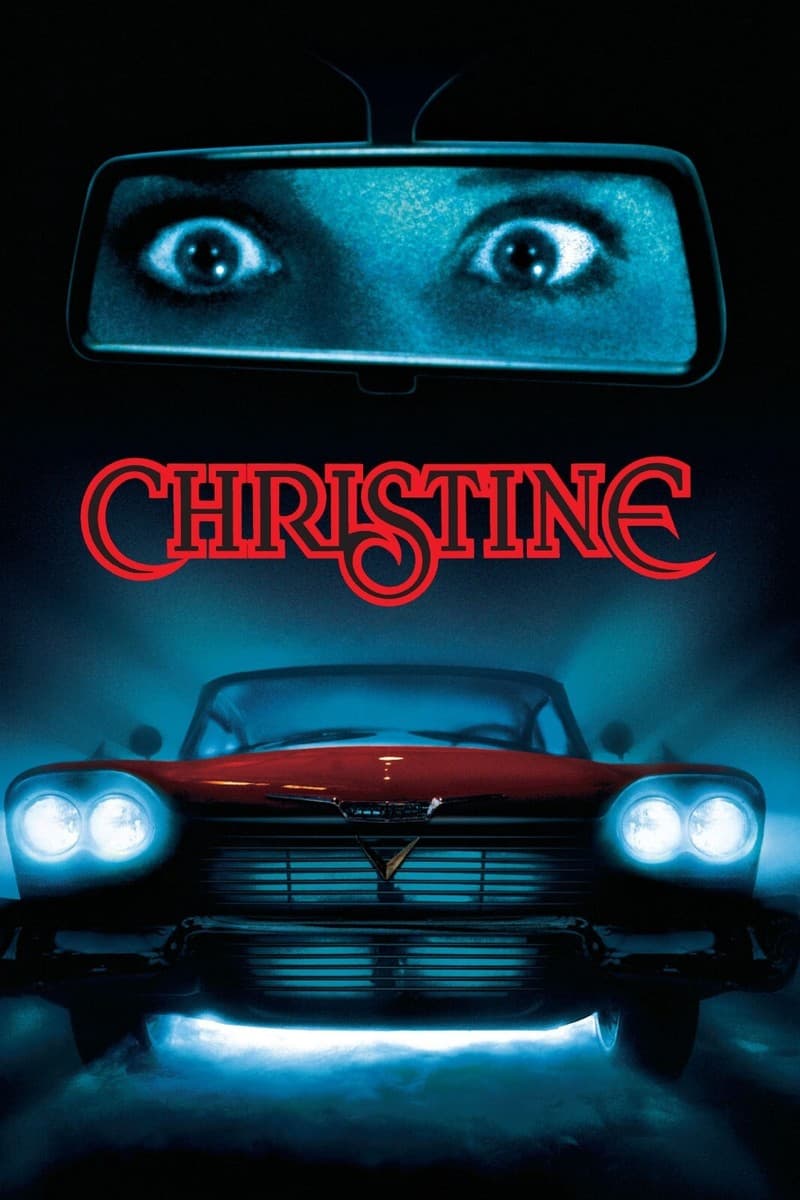
1983
Christine
Obsession, adolescence and a car that won't let go.
Read our take →